Equity Release Facts
A UK equity release information site where every figure names its source and the day it was checked: a calculator, 67 guides, a 289-term video glossary and a public corrections log, with an enquiry route that has produced over 100 leads.
Every figure sourced, dated, and open to being checked
Equity Release Facts explains equity release to UK homeowners in plain English, and its whole position rests on one thing: every figure on the site names the document it came from and the day that document was opened. We designed and built the site around that standard. It has a calculator driven by a dated lender schedule, a weekly rate check, guides, a glossary in which every term has its own short video, and a public log of every correction and every source that could not be verified.
The commercial side is deliberately quiet. A visitor can work out roughly how much they could release, read the risks beside the benefits, and only then decide whether to leave four details for one adviser to ring them. The site is not an adviser and says so plainly, which is what makes the enquiries it does generate worth having. Over 100 so far.
Earn the trust before asking for anything
Figures a reader can actually check
Most equity release content quotes rates and percentages with no source and no date. The brief was to do the opposite, and to make that difference visible on the page.
Answer the money question first
People want to know roughly how much they could release before they hand over a phone number. That had to come before any enquiry, not after it.
Careful with a cautious audience
Later-life borrowing is a serious, regulated decision. The site needed the risks beside the benefits, plain wording about what it is not, and no pressure anywhere.
A calculator, a standard, and a record of what changed
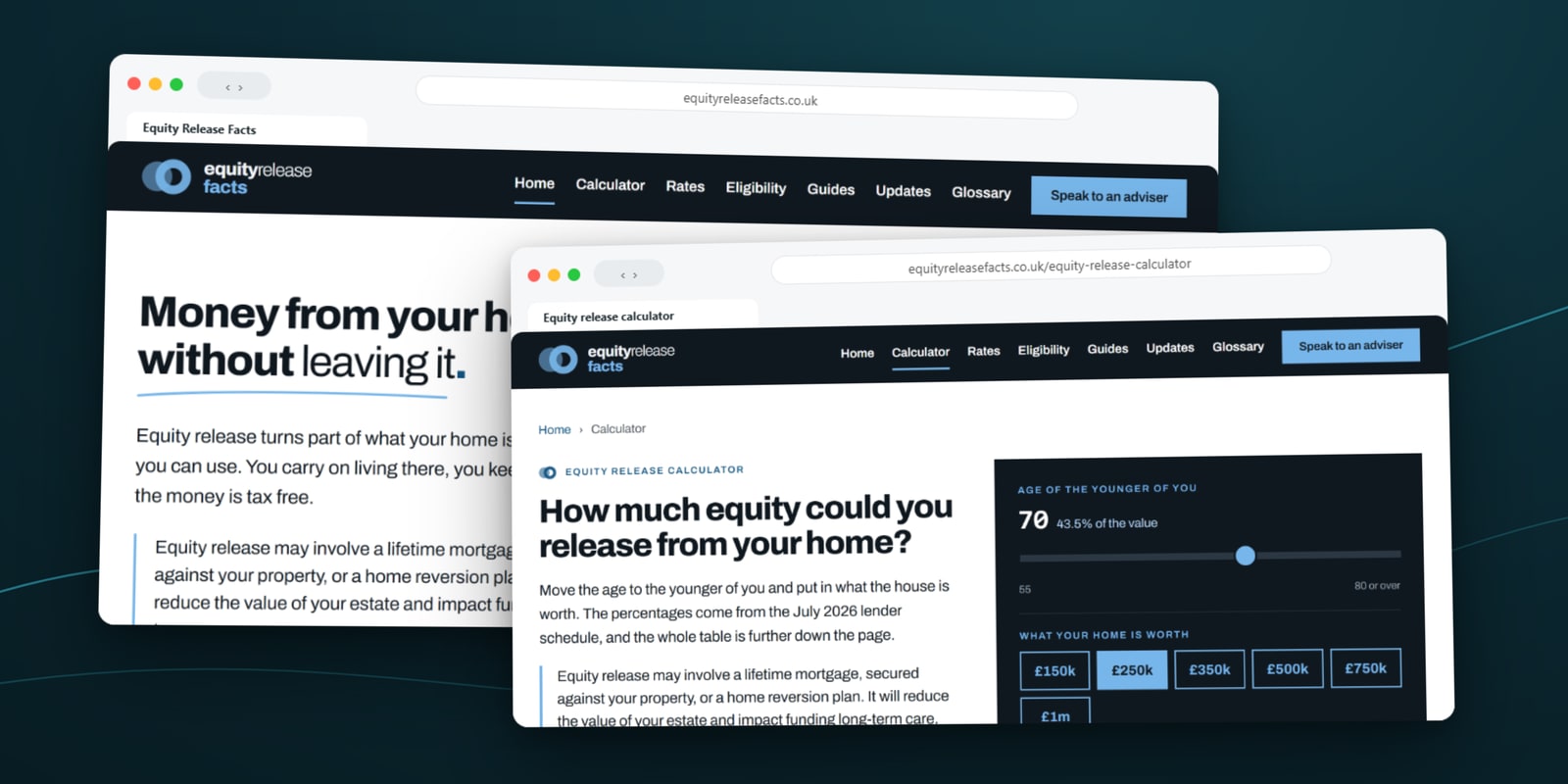
Equity release calculator
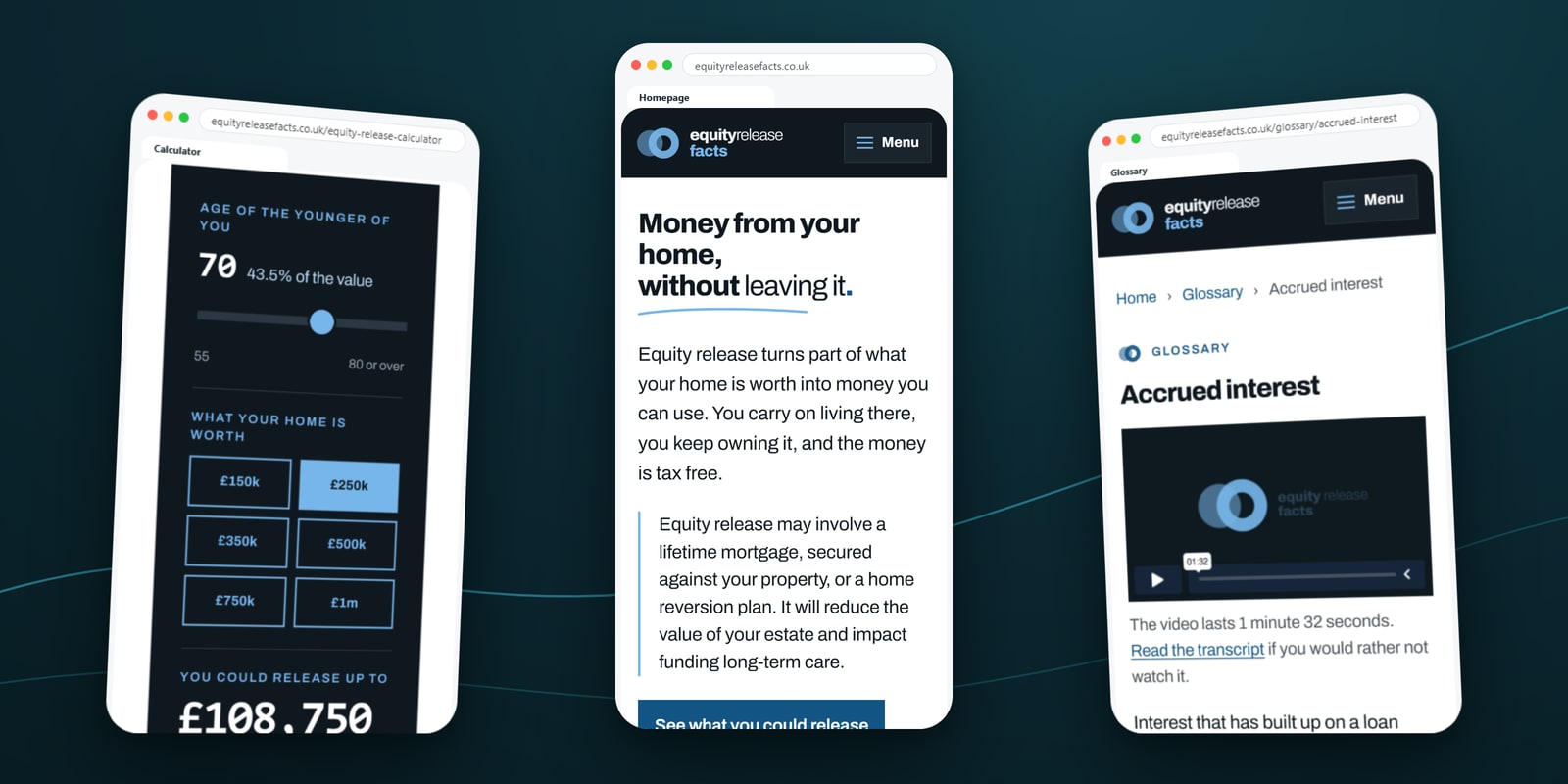
Set the age of the younger applicant and what the home is worth, and see the most that could be released. The figure comes from a dated lender schedule, shown year by year from 55 to 80 further down the page. No contact details are asked for.
A weekly rate check
The rates page lists each named lender’s lowest advertised rate against one fixed example, with the date the rate sheet was opened, and charts the rate against the 15-year gilt yield. A rate not yet confirmed stays in brackets.
A video glossary of 289 terms
Every term has its own page with a short explainer video and a full transcript, from accrued interest to flying freehold. The whole vocabulary also sits on one page, so two words in the same letter can be looked up together.
67 guides in seven groups
Eligibility, costs, the advice process and later-life decisions, plus the property questions most sites skip: flood risk, thatched roofs, septic tanks, short leases and spray foam insulation.
Every question in one place
A searchable list of the 353 questions the site answers, each linking to the page that carries the source and the check date behind the answer.
A public corrections log
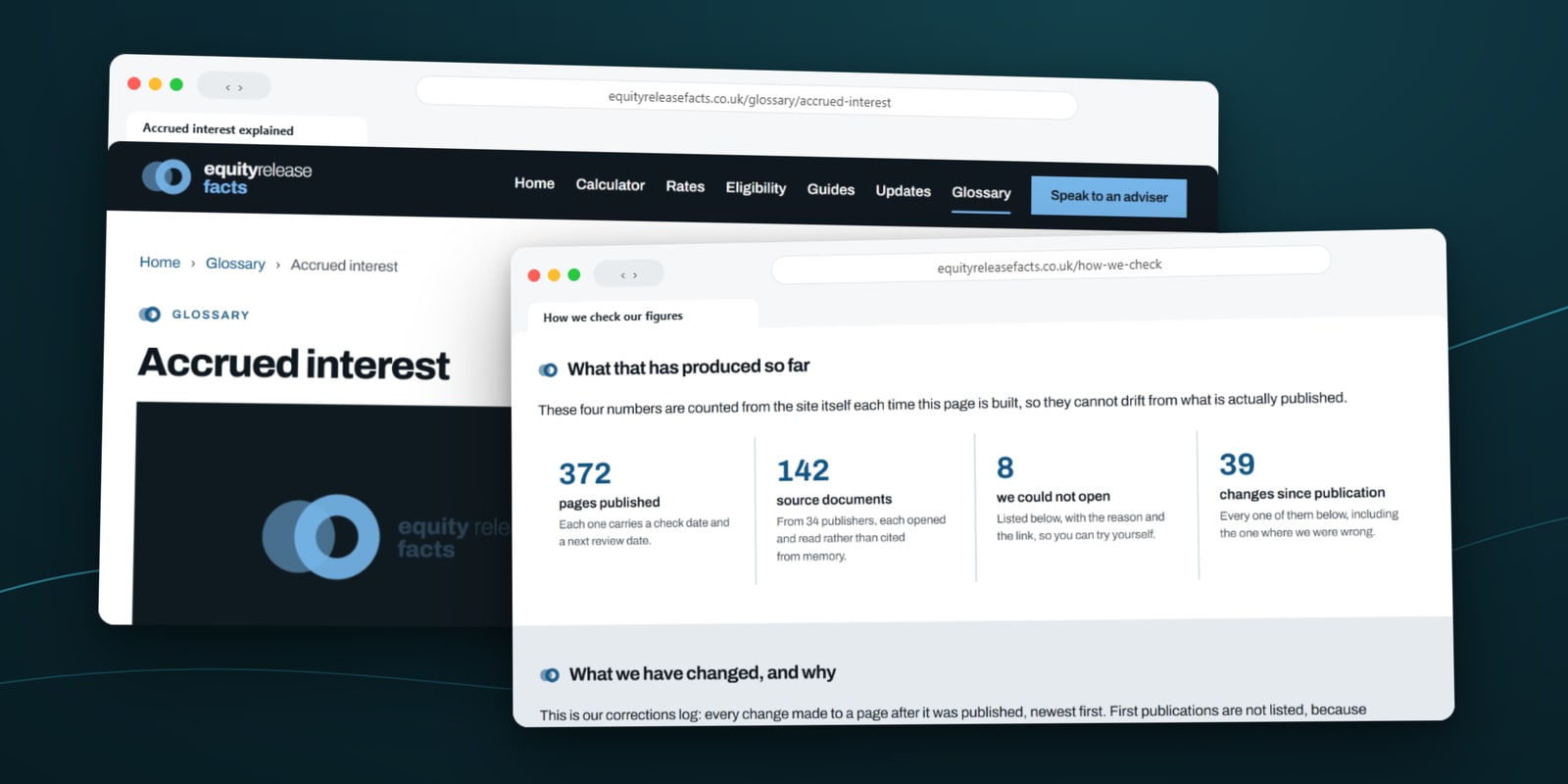
Every change made to a page after it went live, newest first, including the one where the site was wrong, and the eight documents that could not be opened, with the reason and the link.
Checks that stop it going stale
Automated checks run before anything is published and stop it on an unsourced figure, a missing required statement or a broken internal link. A page that passes its review date stops the build too.
A form and analytics that ask first
Four fields, an explicit consent line, and how the site is paid set out above the button. Google Analytics and Microsoft Clarity only load if the visitor says yes.
Five rules, built into the site rather than left to memory
The site publishes the rules it is written to, and the checks that run before every update enforce them. That slower way of working is the reason a cautious reader, and a search engine, can trust what it says.
Name the document
Not “lenders say” or “research shows”. The publisher, the document, and a link anyone can open.
Date every figure
The day the source was opened sits on the page, next to the figure it supports.
Quote rather than summarise
Where a lender’s rule decides something, its own sentence goes on the page, with the plain-English version beneath it.
Bracket what cannot be verified
An unconfirmed figure shows as [like this]. It is never estimated, rounded or borrowed from another site.
Publish the failures
Where a source refused or a widely repeated claim could not be traced, the page says so rather than leaving it out.
Screens from the build
Research first, enquiry second, and it works
leads generated for the business since the site went live.
From our very first meeting, Jersey Web made it easy. I explained what I wanted: a site where every figure has a source and a date, and where nobody is ever pushed into anything. They understood the aim straight away and built around it, rather than trying to sell me something different. We got on from the start, and they have been easy to deal with ever since. When I want a change, I ask and it gets done, with no fuss. They are fair, straightforward and honest about cost, and I trust them with a site where accuracy matters more than anything. I would happily recommend them.
UK equity release information site