Watch a related explainer
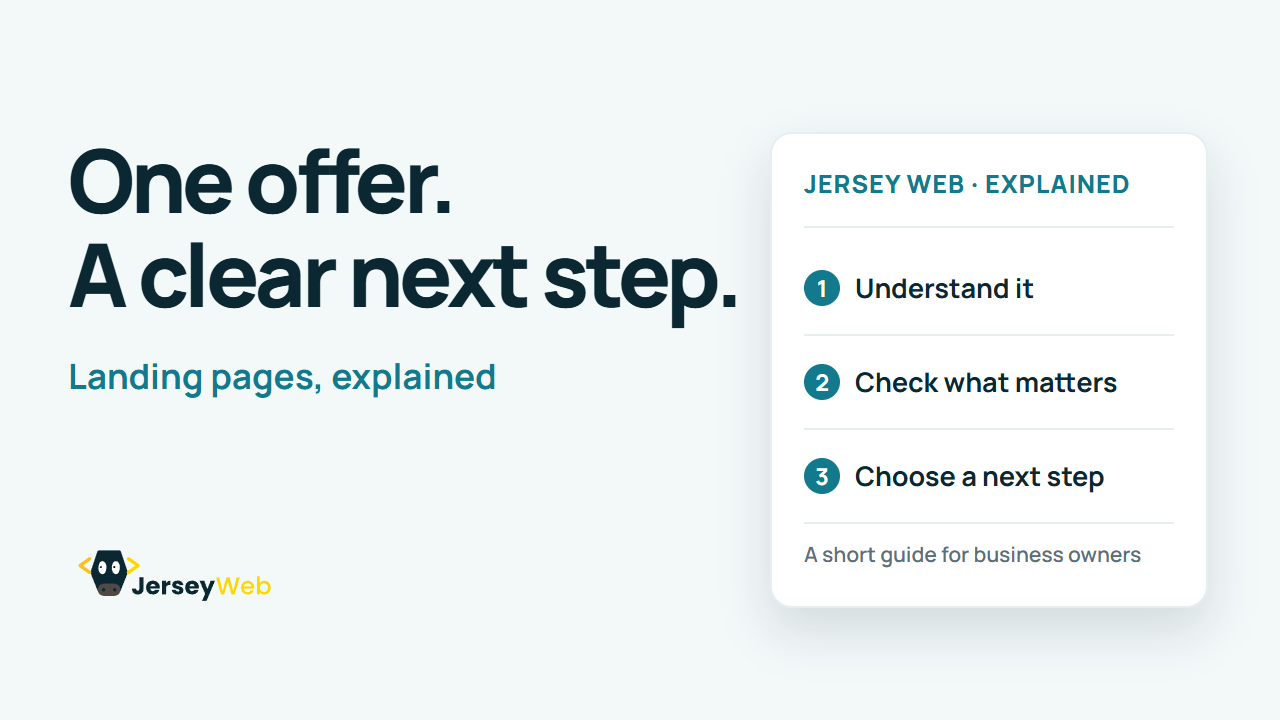
In plain English
In its broad sense, a landing page is simply where a visitor lands after following a link. Marketers often use the term for a more focused page built around a particular advert, email or offer. Google Ads uses the broad definition: the page people reach after clicking an advert. A dedicated campaign page is a common way to make that destination more relevant.
Imagine a shop window promising a weekend sale. The door behind that window should open into the sale, not into an unrelated aisle. A landing page works in the same way. If an advert promises a quote for a kitchen renovation, the destination should explain that service and make requesting the quote straightforward. Google Ads guidance recommends matching the page to the advert and its call to action.
A homepage has a different job. It introduces the whole business, with routes to services, contact details and background information. A focused landing page can remove distractions, but it still needs enough information for a person to decide whether to act. Hiding the price basis, location or key conditions just to make a page look short can create doubt.
Why it matters to a Jersey business
Jersey businesses often have distinct audiences. A local resident booking a routine service, a visitor planning a stay and someone ordering a gift for delivery may need different answers. Sending all three to the same generic homepage asks them to do the sorting. A page built around one offer can state who it is for, where the business serves and what happens next.
Local details can make a substantial difference to clarity. State whether a service covers all parishes, whether appointments are at a St Helier premises or online, and whether deliveries include outlying addresses. Those are practical facts, not search phrases to repeat for their own sake. If a campaign ends, review the page instead of leaving a dated offer visible indefinitely.
A Jersey example
Picture a Jersey gardening business advertising autumn tidy-ups by email. The link could open a page that explains the work, the areas covered, how quotations are arranged and when the team expects to respond. Its main action might be a short enquiry form. A visitor should not have to search the rest of the site to discover whether their parish is covered.
This is a hypothetical example. The exact page would depend on the business and its capacity. If its email promises a call back, the form should ask for a suitable number and make that expectation clear. If the team only accepts requests for later months, that should be stated before someone submits details.
What to do
Start with the visitor’s question: what did they click, and what do they expect to find? Write a headline that confirms the offer. Follow it with the essential details, useful evidence you can verify, and one main action. Explain what happens after a form is sent. Make phone numbers tappable and forms short enough to use on a small screen. Test every link and the full enquiry route before running an advert.
Choose a measure that reflects the business goal. Visits are useful context, but a completed and useful enquiry is closer to the result most service businesses care about. If you use analytics or advert tracking, review the site’s privacy notice and cookie choices. Our landing page design service covers the build; the guide below helps you prepare the wording and information it needs.
Common myths
A landing page must remove all navigation. Some focused pages do, but visitors may still need access to your contact, privacy or business details. Keep the route clear without trapping people.
More buttons always mean more enquiries. Repeating one relevant action can help, but competing requests can make the next step harder to understand.
A beautiful page fixes a weak offer. The page can explain an offer well. It cannot make unclear terms, unavailable dates or a broken booking process attractive.
Our take
Jersey Web’s view is that a landing page should honour the promise made in the link that led to it. Clarity about the offer, the island area served and the next step usually matters more than decorative effects. Test the page with a person who has not seen the campaign brief.
Related terms
Learn more
Common questions
- Is a landing page the same as a homepage?
- No. A homepage introduces the whole business and gives visitors several routes. A dedicated landing page usually serves one campaign or offer and leads towards one main action.
- Does every advert need its own landing page?
- Not necessarily. The important point is that the destination answers the promise in the advert. One page may serve closely related adverts, while different offers often need different pages.
- Can a landing page appear in Google Search?
- Yes, if it is accessible and indexable, but campaign pages are not guaranteed to rank. Give each page useful, distinct content and decide whether it should remain in search after the campaign ends.
- What should a landing page measure?
- Track the action the page asks for, such as a valid enquiry, booking or purchase, as well as visits. Check the measurement setup and privacy information before using analytics.
Written by Jersey Web. Last reviewed 3 October 2026. Back to the Jargon Buster.