Watch a related explainer

In plain English
SEO stands for search engine optimisation. It is the work of making a website understandable to search engines and useful to the people searching. Think of a well-labelled shop: customers can tell what is sold, where to go and whether it meets their need. A search engine needs comparable clues in the page title, text, links and technical setup. Google’s own starter guide frames SEO as helping search engines understand content and helping users decide whether to visit.
There is no single SEO switch. A clear service page explains what the business offers. A sensible page structure makes information easy to find. Technical checks help crawlers reach the content and avoid duplicate or broken pages. Links within the website connect related information. Search Console can show which searches lead to visits and which pages have problems. These activities support the same goal but solve different issues.
SEO usually refers to unpaid, sometimes called organic, results. It is separate from buying an advert. It also differs from local SEO, which focuses on being relevant to nearby customers and local search features. A Jersey business may need both good general pages and accurate local details.
Why it matters to a Jersey business
A customer may search for “accountant in Jersey”, “St Helier bike repair” or a specific question before choosing anyone. A website that explains its service and area clearly gives that person a way to judge whether to get in touch. Even somebody referred by a friend may search the business name to check opening hours, work examples or contact details.
The island market makes accuracy especially important. A service page should say which parishes you cover only if you actually serve them. An online-only business should not claim a walk-in location. Adding “Jersey” to every sentence is less useful than answering what a local customer needs to know: availability, service area, booking process and a working contact route.
Search visibility is not guaranteed. Google explains that crawling, indexing and showing a page are separate stages, and that not every page makes it through them. A sensible SEO plan therefore measures useful enquiries and the pages that earn them, not just a single rank for one phrase.
A Jersey example
Imagine a St Brelade garden maintenance business with one homepage that says only “Welcome”. A visitor searching for hedge cutting may never learn that the business offers it. The owner adds a service page explaining the work, the areas covered, what an enquiry should include and photographs of their own jobs. The site also links to that page from the homepage and checks that Google can discover it. That is SEO in practical terms. The example is illustrative, and it does not promise a particular position.
The same owner checks the business’s online contact details. If a customer lands on the page but cannot tell whether the service covers their parish, visibility alone has not helped.
What to do
Start with the questions customers ask before contacting you. Give each main service a clear page with a descriptive title and helpful words. Show where you work, how someone contacts you and what happens next. Make the site usable on a phone, keep important pages linked from the navigation and fix broken links. Use Google Search Console to see whether Google can access the site and which searches already bring visitors.
If you hire someone, ask what will be changed, how success will be measured and what you can inspect. Reports should connect work to the business, such as better qualified enquiries, rather than show only a rising count of keywords. Our local SEO guide for Jersey covers the wider plan; this page defines the term and the first checks.
Common myths
“SEO is adding a keyword as often as possible.” Clear, useful content helps people and search engines; repetition can make a page harder to read.
“I can pay Google to rank my normal pages higher.” Google says it does not accept payment to rank pages higher.
“One round of edits finishes SEO.” Services, customer questions, competitors and websites change. Review performance and update pages when the business changes.
Our take
Jersey Web’s view is to start with the customer’s decision. If a page makes the business, service area and next step clear, technical SEO has something useful to support. A promise of a particular position says less about good work than a clear explanation of the changes and their purpose.
See it in a diagram
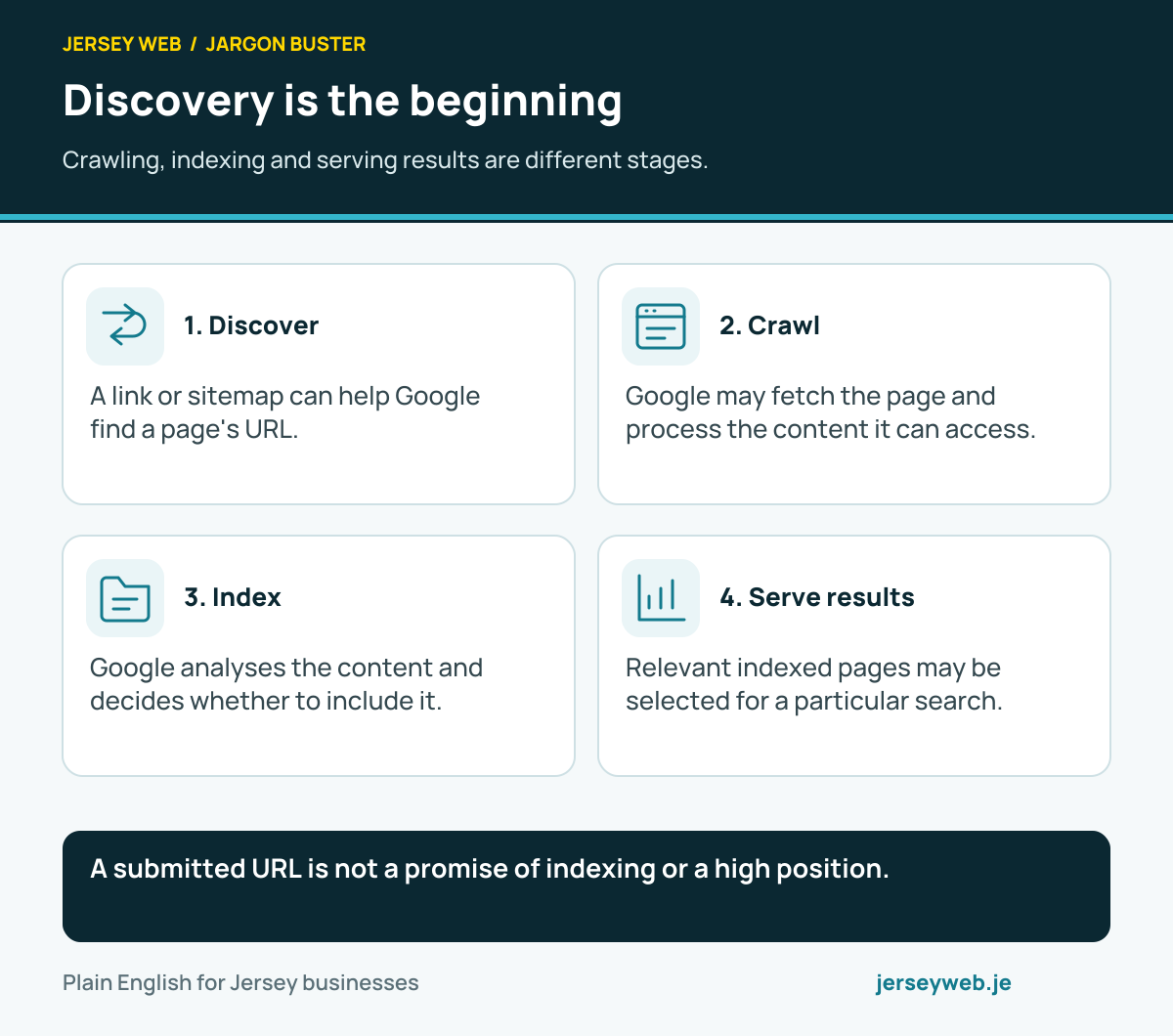
A submitted URL is not a promise of indexing or a high position.
Read the diagram in text
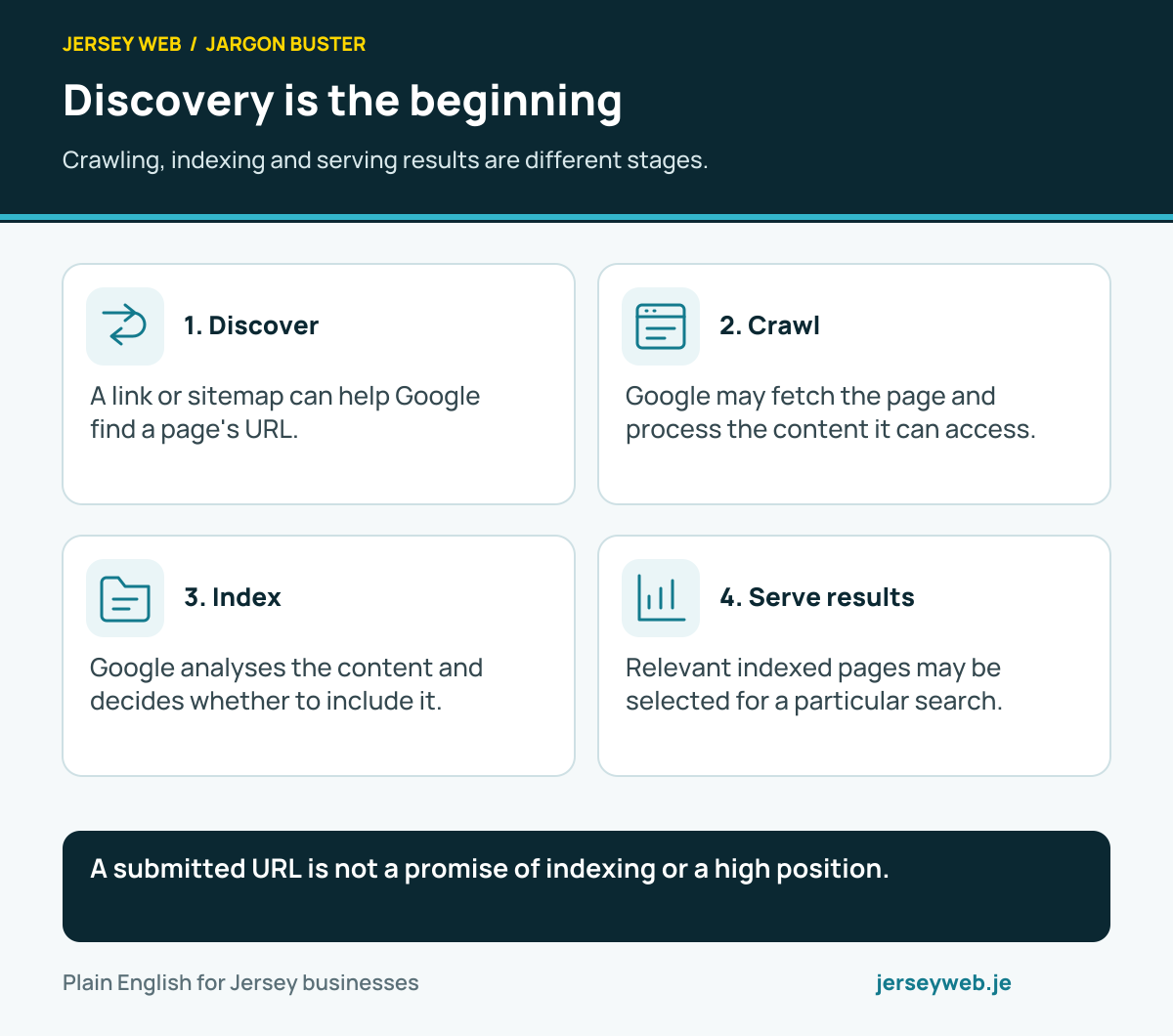
- Discover. A link or sitemap can help Google find a page's URL.
- Crawl. Google may fetch the page and process the content it can access.
- Index. Google analyses the content and decides whether to include it.
- Serve results. Relevant indexed pages may be selected for a particular search.
Related terms
Learn more
Common questions
- Is SEO the same as paying for Google Ads?
- No. SEO concerns a site's visibility in unpaid search results. Ads are paid placements. A business can use either or both, but paying for ads does not buy a higher position in Google's unpaid results.
- How quickly does SEO work?
- There is no fixed timetable. Search engines need to discover and process changes, and results depend on the site, search and competition. Google's own guide says some changes may show in hours while others take months, so judge work over time.
- Can anyone guarantee first place on Google?
- No. Google says it does not accept payment to rank pages higher and does not guarantee that a page will be indexed or shown, even when it follows the essentials. Be wary of a guaranteed position.
- Do I need SEO if most customers find me by word of mouth?
- It can still help people who hear your name check your services, opening details and contact route. Start with a useful, accessible website and accurate business information, then decide whether more search work is worth the investment.
Written by Jersey Web. Last reviewed 3 October 2026. Back to the Jargon Buster.