Watch a related explainer
In plain English
A domain name is the address on your digital shopfront. People can remember a name such as example.je more easily than the numerical address a computer uses. When they enter it in a browser, the Domain Name System, or DNS, helps their device find the right destination. Mozilla’s domain guide explains how readable names relate to internet addresses.
The address is useful for more than a website. It can appear after the @ in a business email address. Your website and email may use different suppliers even though the addresses share one domain. This is why a domain is a piece of business infrastructure, not merely a design detail. A redesign can come and go while the address remains familiar to customers.
You register a domain through a registrar or, for some names, directly with a registry. ICANN describes a registrant as the person or organisation that registers the name and enters into an agreement with a registrar. Registration is time limited and has rules; it is not a one-off purchase that lasts for ever. For a .je name, the Channel Islands registry has its own arrangements.
Why it matters to a Jersey business
Your domain can be printed on vehicles, menus, business cards and invoices. Changing it later means updating all of those places and telling customers where to find you. Choosing a clear name and keeping control of its registration saves avoidable work. A .je address can make the island connection obvious, though a .co.uk or other ending may also suit the way your business trades. Our guide to choosing between .je and .co.uk looks at that decision in more detail.
The registry says that domain registration, nameservers, web hosting and email handling are different services. That matters if you change designers. The departing supplier might host the old site but the business can still keep its registered address. You need to know where the domain is registered, who controls its account and which service currently manages its DNS.
Keep the registrant and administrative contact details accurate. If renewal messages go to an old employee or a designer’s private inbox, a routine payment may become urgent. Put renewal dates and access instructions in the same business records as other essential subscriptions.
A Jersey example
Imagine a Grouville café called Orchard Table. It registers orchardtable.je for its menu site and uses hello@orchardtable.je for bookings. The site is built by one supplier, and email is provided by another. A year later the café replaces the site. It does not need to change the printed web address or customer email. Its new provider changes the web destination while checking that the mail records still point to the existing inbox provider. The business and domain are hypothetical; the arrangement is common.
The café should have access to its registrar account even if a designer handles the technical work. Then it can renew the name, approve a transfer or ask another professional to help without depending on one person’s goodwill.
What to do
Choose a name customers can spell after hearing it once. Check that it is available, then confirm the registration and renewal price before paying. Use a business controlled email address for the account and record who the registrant is. Turn on renewal reminders and keep a second responsible person informed if you can.
Ask your provider to show you where DNS is managed and to document the website and email records. You do not need to memorise those settings, but you should know who can change them. If an existing domain appears to be held in a supplier’s name, the practical steps in our domain recovery guide are more useful than starting a duplicate registration.
Common myths
“Paying a web designer means the domain is automatically in my name.” Check the registrant record and account access rather than assuming.
“My domain includes a website and inboxes.” Some suppliers bundle them. The registration itself only establishes the name; other services make the site and mail work.
“Changing providers means changing addresses.” You can usually keep your domain and redirect it to new providers.
Our take
Jersey Web’s view is that the business should be able to identify its registrar, registrant and renewal date without asking a former supplier. These are small administrative details until the day the website or email needs to move. Keeping them documented makes a change much simpler.
See it in a diagram
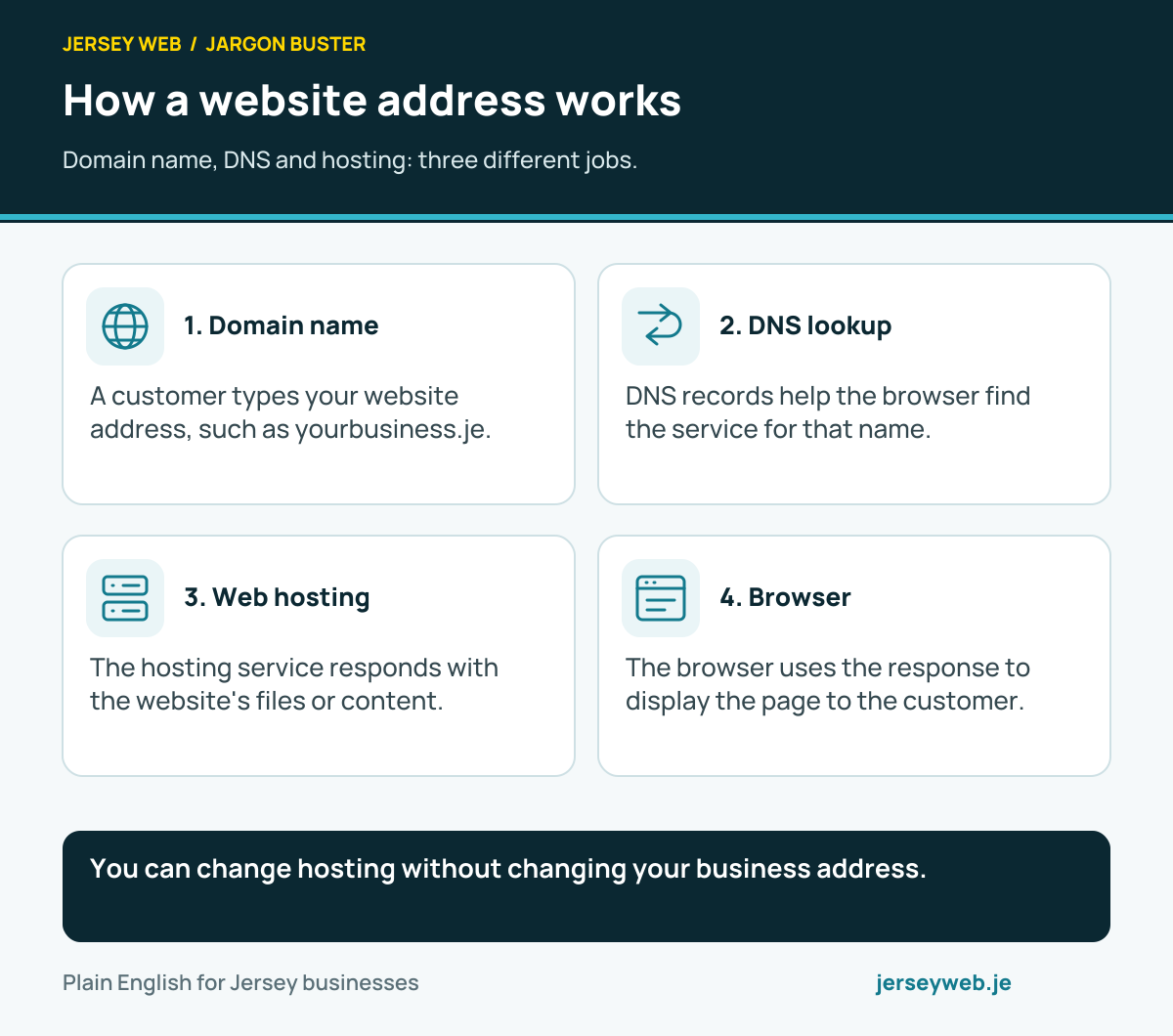
You can change hosting without changing your business address.
Read the diagram in text
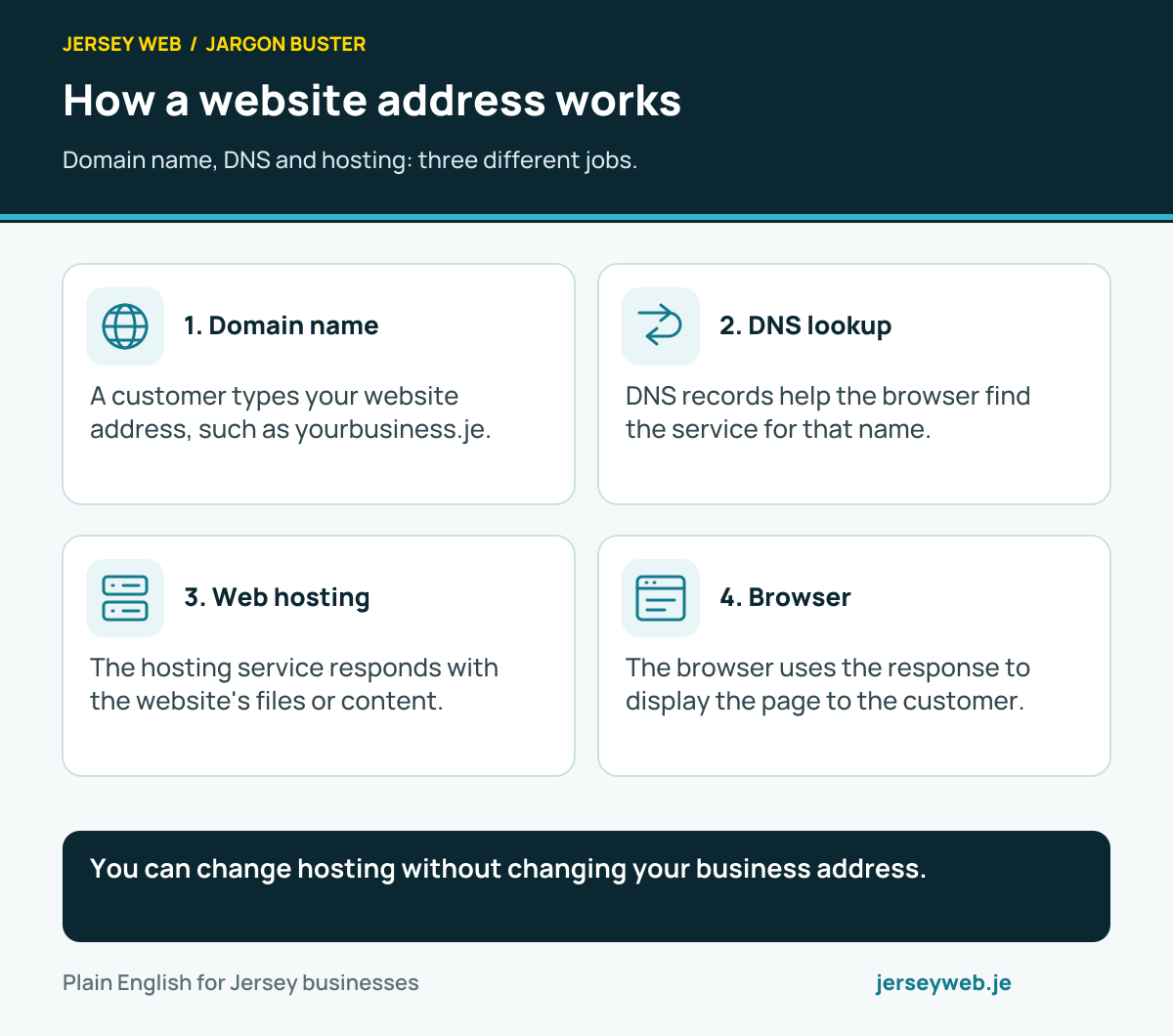
- Domain name. A customer types your website address, such as yourbusiness.je.
- DNS lookup. DNS records help the browser find the service for that name.
- Web hosting. The hosting service responds with the website's files or content.
- Browser. The browser uses the response to display the page to the customer.
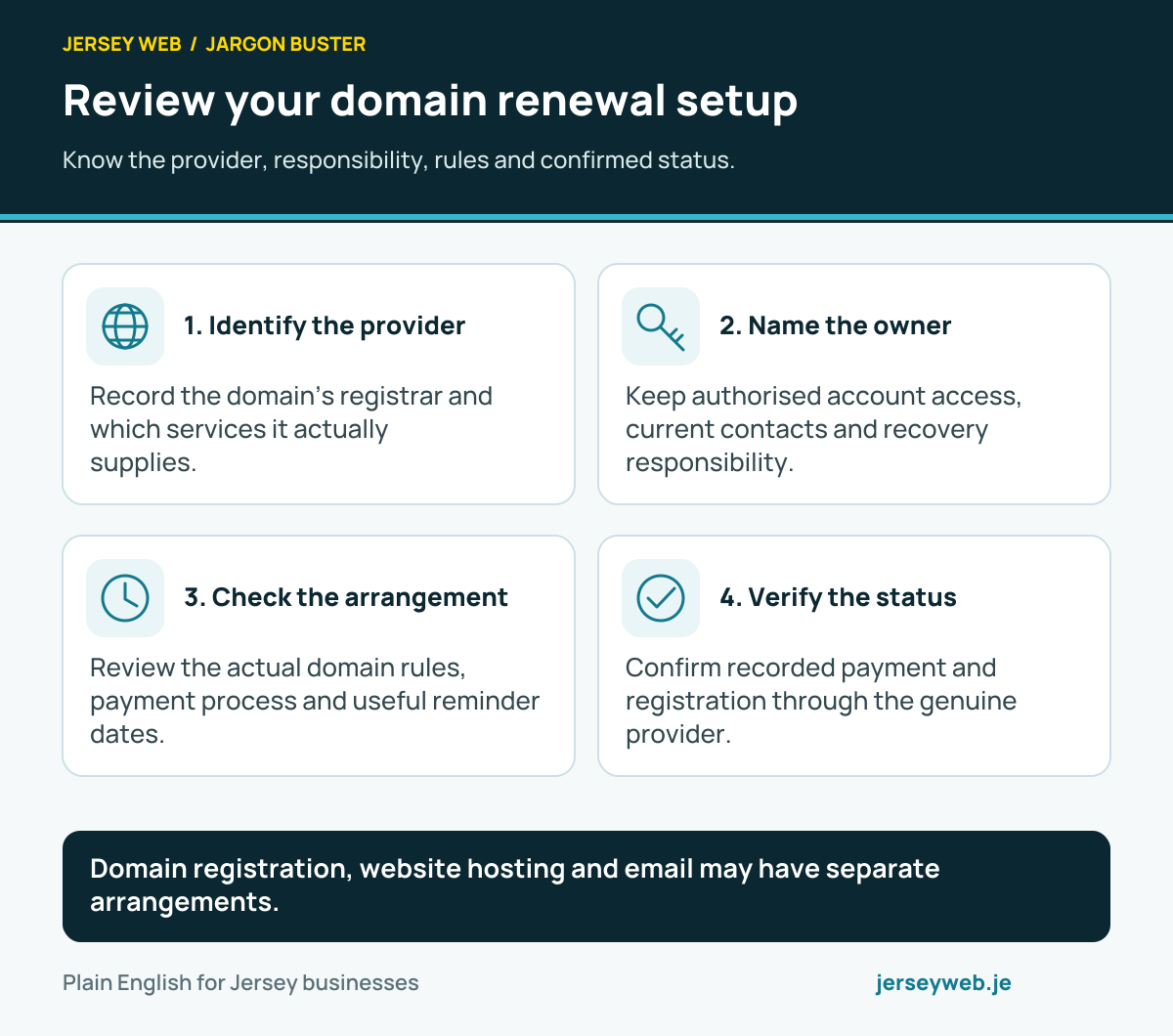
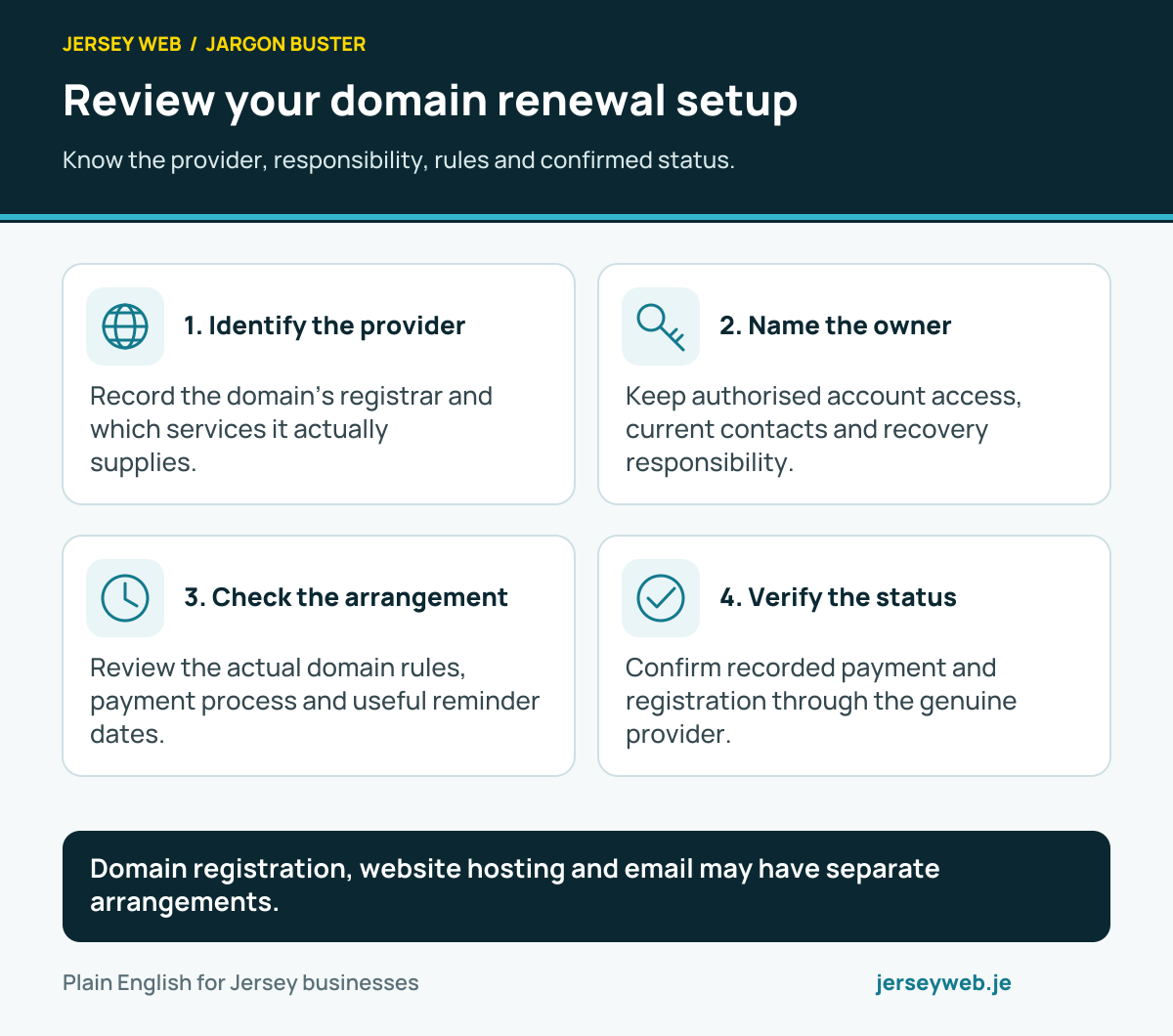
Domain registration, website hosting and email may have separate arrangements.
Read the diagram in text
- Identify the provider. Record the domain’s registrar and which services it actually supplies.
- Name the owner. Keep authorised account access, current contacts and recovery responsibility.
- Check the arrangement. Review the actual domain rules, payment process and useful reminder dates.
- Verify the status. Confirm recorded payment and registration through the genuine provider.
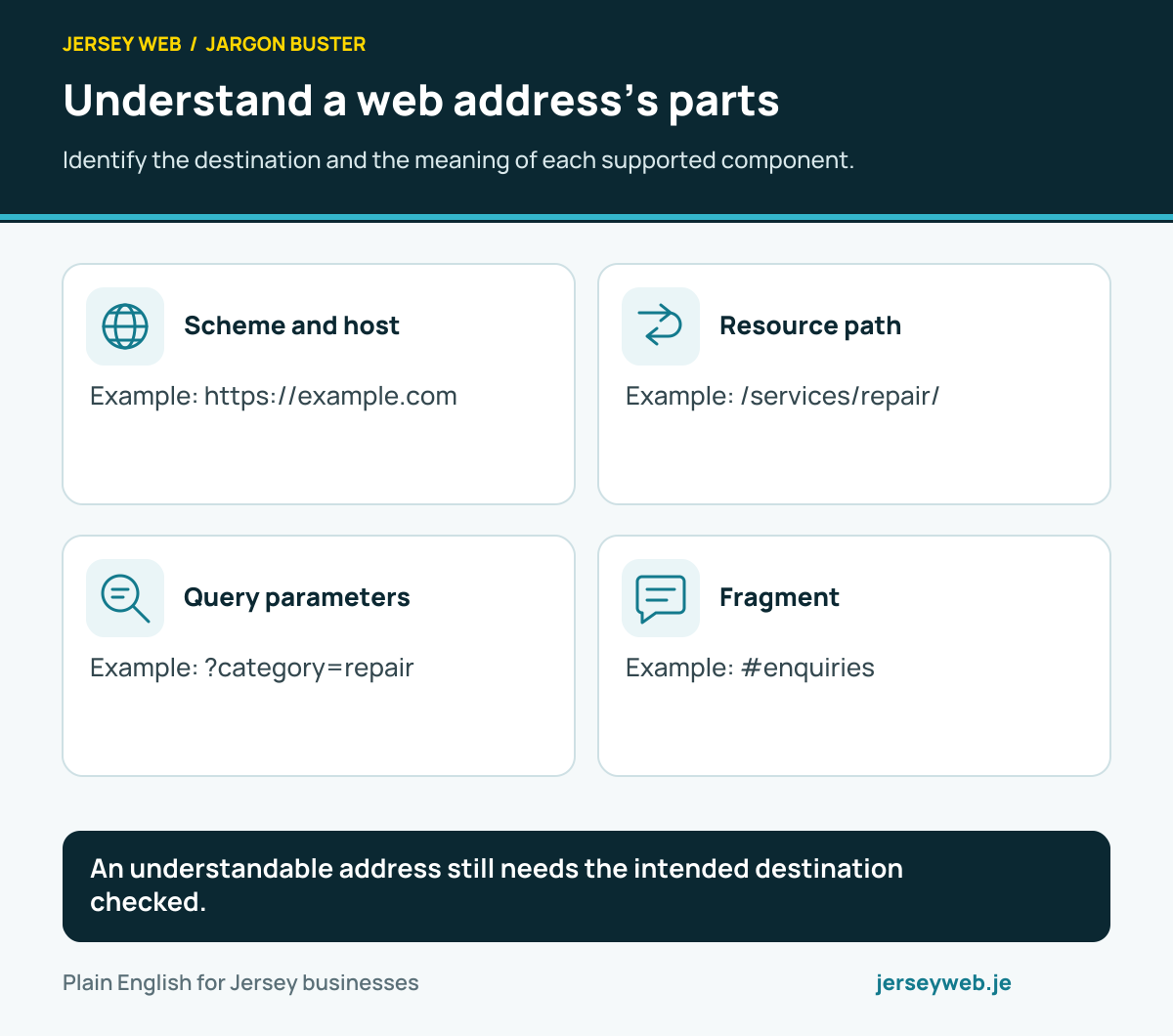
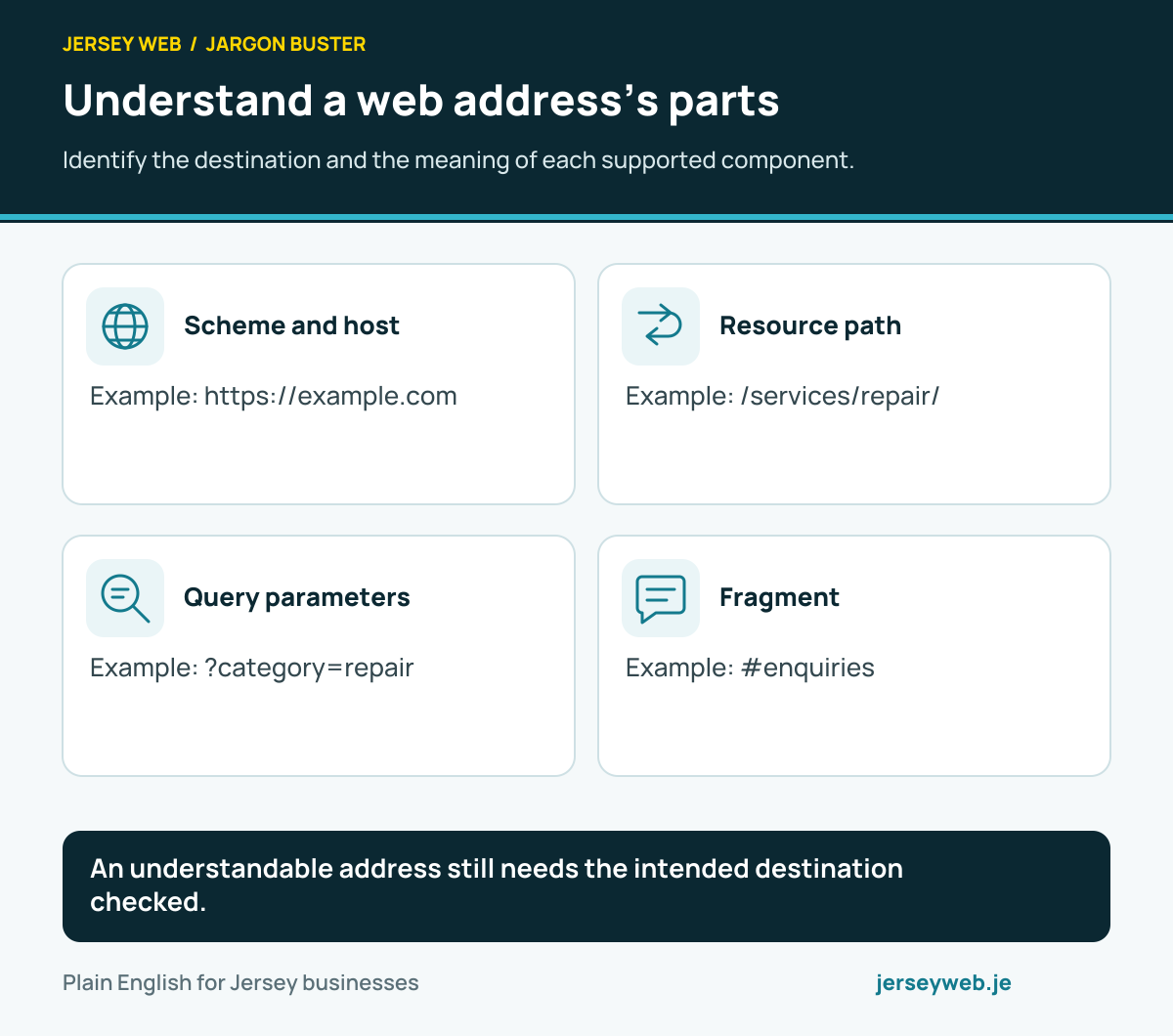
An understandable address still needs the intended destination checked.
Read the diagram in text
- Scheme and host. Example: https://example.com
- Resource path. Example: /services/repair/
- Query parameters. Example: ?category=repair
- Fragment. Example: #enquiries
Related terms
Learn more
- ServiceBusiness email and domain setup in Jersey →
- GuideDo you need a .je domain, or will .co.uk do? →
- GuideHow to get your website and .je domain back from an old web designer →
- VideoDomain Renewal Checklist: Keep Your Business Address in Your Control →
- VideoHow to set up a professional business email address →
- VideoDomain Name vs Website Hosting: 6 Things to Know →
Common questions
- Is a domain name the same as a website?
- No. The domain is the address people use. The website is the pages and files available at that address, supplied by a hosting service or website platform.
- Do I own a domain name forever after paying once?
- No. A registration must be renewed under the relevant registry and registrar terms. Keep the business's contact and payment details current so renewal notices reach the right person.
- Can my web designer register the domain for me?
- They can help with the process, but check that your business is recorded as the registrant and can access the account. That makes future renewals, DNS changes and transfers easier to manage.
- Can one domain serve both a website and email?
- Yes. Different DNS records can direct web visitors and email to different providers. Changing the website provider need not require changing the email provider, but the settings should be checked before a move.
Written by Jersey Web. Last reviewed 3 October 2026. Back to the Jargon Buster.