Selling online from Jersey: six checks before your shop goes live
A Jersey online shop sells into two tax systems: Jersey GST at home and UK VAT on parcels to the UK. The video covers six checks, and the notes under it explain each one with the official sources.
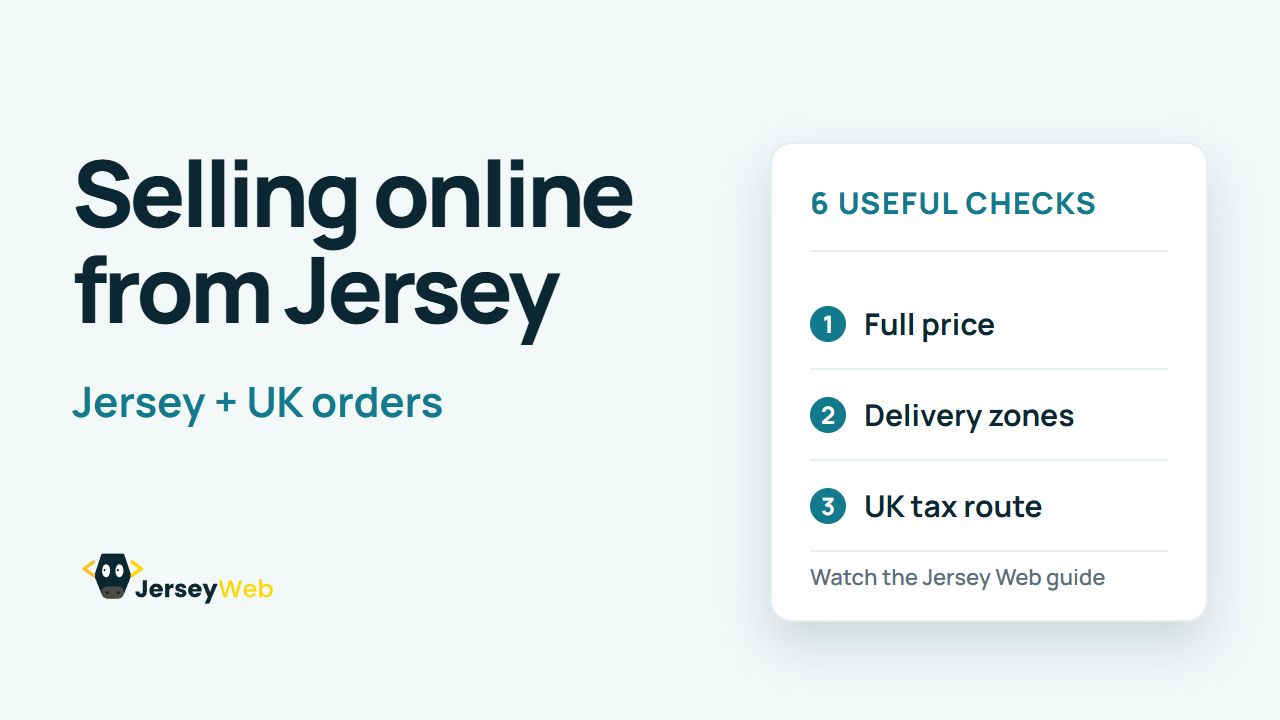
1:47 · No narration: the video shows each step as text on screen, and every step is written out below, with buttons that jump the video to it.
Prefer YouTube? Watch this video on our YouTube channel (opens in a new tab).
This video goes with our guide Selling online from Jersey: postage, UK VAT and GST, which has the full detail.
The 6 checks in the video
The video opens with a question: selling online from Jersey? Jersey and UK orders need different checks, so it sets out six things to plan before you launch.
-
Step 1: Show the full price
Make taxes and delivery clear before payment.
Jersey GST is 5% (opens in a new tab) on most goods and services. You only have to register (opens in a new tab) once your taxable supplies reach £300,000 in 12 months, or you expect them to. If you are registered, most businesses must show prices including GST (opens in a new tab).
The Distance Selling (Jersey) Law 2007 (opens in a new tab) also says a consumer must be told the price including all taxes, and any delivery costs, before they buy. Show postage on the product page or in the basket, so the total at payment is never a surprise.
-
Step 2: Split delivery zones
Local collection and UK postage differ.
Set up at least two zones in your shop: Jersey, with collection if you offer it, and the UK. A parcel to a UK address leaves the island and needs customs data, while a local delivery doesn’t, so price and describe the two separately.
Local delivery is worth showing off. Islanders now pay GST on imports too: gov.je says (opens in a new tab) it is collected on goods worth £60 or more from sellers who aren’t registered for Jersey GST, and large overseas retailers have to charge it at checkout. Clear local prices and collection give a Jersey shop a real case to make.
-
Step 3: Check UK tax
Confirm how VAT is handled for UK orders.
Goods sent from Jersey to UK customers are imports as far as UK VAT is concerned. For consignments worth £135 or less sold directly to UK consumers, HMRC’s rule (opens in a new tab) is that the seller charges UK VAT at the point of sale, which means registering for UK VAT. HMRC makes an exception for parcels from Jersey and Guernsey where the VAT is paid through the Import VAT Accounting Scheme (IVAS).
IVAS (opens in a new tab) is run by Jersey Post with Jersey Customs and HMRC. Members put their IVAS number on each label, send Jersey Post a monthly VAT declaration with payment, and Jersey Post pays HMRC, so parcels shouldn’t be held in the UK for VAT. You need to be registered with the JFSC to apply. Selling on Amazon? Jersey Post advises letting Amazon account for the VAT on orders under £135.
-
Step 4: Prepare parcel data
UK parcels need accurate customs details.
Since 1 April 2022 (opens in a new tab), parcels of goods sent from Jersey to the UK need electronic customs data, known as Electronic Advance Data (EAD). Jersey Post warns that parcels without it can be delayed, charged extra, sent back or even destroyed. Every label made through Jersey Post includes it.
Describe each item accurately and use the right HS tariff code; Jersey Post’s customs page (opens in a new tab) explains both. If you post regularly, an Online Postage Account (opens in a new tab) fills in the customs paperwork on each label and bills you monthly.
-
Step 5: Write shop terms
Explain cancellation and returns clearly.
Under the Distance Selling (Jersey) Law 2007, a consumer can normally cancel within 7 working days of receiving goods, once you have sent the written confirmation the law requires. Refunds are due within 30 days of the cancellation. Personalised and perishable goods are among the exceptions.
UK shoppers are used to 14 days to cancel (opens in a new tab) under UK rules. Offering at least 14 days to every customer costs little and saves an argument about which rules apply. Repeat your terms, and how to cancel, in the order confirmation email.
-
Step 6: Test the checkout
Try a Jersey order and a UK order yourself.
Before launch, place one order to a JE postcode and one to a UK address. Check that the price only changes by the delivery charge you showed, that the right postage zone applies, and that the confirmation email arrives with your terms. If you’re registered for GST, gov.je requires your GST number on receipts and invoices.
Then post a real parcel to someone in the UK through the route you’ll use, so you know how the labels, customs data and VAT step work before a customer is waiting.
Good to know before you set prices
- Jersey Post’s VAT advice isn’t consistent. Its customs page says items worth more than £39 need VAT paid, while its IVAS guidance says all commercial items carry VAT. Ask its Business Team which applies to what you sell.
- Unpaid VAT lands on your customer. Jersey Post says Royal Mail may add a handling fee for items without prepaid VAT, which the recipient may be asked to pay on delivery.
- Business customers are different. HMRC says a seller doesn’t charge UK VAT at the point of sale on a consignment of £135 or less when the buyer is a business and gives its UK VAT number.
- eBay works its own way. Jersey Post asks IVAS members to check with eBay how VAT is handled on their account.
This is general information, not tax advice. For your own figures, ask an accountant, and ask Jersey Post’s Business Team about IVAS and postage accounts.
Common questions
Do I charge GST when I sell online from Jersey?
Only if you are registered for GST. Registration is compulsory once your taxable supplies reach £300,000 in 12 months, or you expect them to. Jersey GST is 5%, and most registered businesses must show prices including it.
Do UK customers pay VAT on goods sent from Jersey?
Yes, UK VAT applies. For parcels worth £135 or less sold directly to UK consumers, HMRC expects the seller to charge it at checkout, unless the VAT is paid through Jersey Post’s IVAS scheme. If nothing is prepaid, Royal Mail may ask the customer for the VAT and a handling fee.
What is IVAS?
The Import VAT Accounting Scheme, run by Jersey Post with Jersey Customs and HMRC. Members label parcels with an IVAS number, send Jersey Post a monthly VAT declaration with payment, and Jersey Post pays HMRC, so parcels shouldn’t be held in the UK for VAT. You need to be registered with the JFSC to apply.
Do I need customs details to post goods from Jersey to the UK?
Yes. Since 1 April 2022, parcels of goods sent from Jersey to the UK need electronic customs data. Labels made through Jersey Post include it, online or at a post office.
Does Amazon collect UK VAT for Jersey sellers?
On orders under £135, Amazon accounts for the VAT, and Jersey Post advises IVAS members to let it do so. Above £135 you can declare items through IVAS. Check with eBay how it handles VAT on your account.
How long do customers have to return an online order from a Jersey shop?
Under Jersey’s Distance Selling Law, normally 7 working days after receiving the goods, once you have sent the written confirmation. UK shoppers expect 14 days under UK rules, so many Jersey shops offer at least 14 days to everyone.
Go further
More video tips
All 205 videos →
Starting a business in Jersey: from registration to website
Six stages from business idea to first website, in the order Jersey needs them.
Website grants in Jersey: 6 checks before you apply
Hoping a grant will pay for your website? Six things to check before you budget for it.