In plain English
CPC stands for cost per click. In advertising, it can describe click-based pricing or a reported cost measurement. Google Ads’ definition explains paying for ad clicks in the relevant bidding arrangement. When looking at a report, distinguish the cost actually recorded from a bid setting used by the campaign.
Average CPC summarises the included click costs. The average-CPC explanation gives the calculation: total relevant click cost divided by the number of clicks. An average does not mean each click cost the same amount. It combines the costs within the selected period and scope.
The unit is money per click. That is a useful cost description, but it does not say whether a visitor became a suitable customer. A campaign’s purpose, the landing experience and the resulting business outcomes still matter. Keep the metric’s definition visible when discussing a report so a small number is not casually described as success.
Why it matters for a Jersey business
A local service business may use advertising to reach people looking for a relevant service. The owner needs to understand the relationship between recorded cost, visits and useful enquiries. CPC can contribute to that discussion, provided the campaign and reporting period are clear and the team checks what those visits actually produce.
The business may also serve a specific area or offer a specialised service. A click from someone whose needs cannot be met still contributes to the relevant click count. Review the offer and customer journey alongside the report. A generic cost benchmark from another business is not evidence of an appropriate target for this one.
A realistic Jersey example
Imagine a Jersey service business reviewing an advertising report. This is a hypothetical calculation, not a customer result or current market price. The selected report contains £50 of click cost and 25 clicks. Dividing £50 by 25 gives an average CPC of £2 for that defined scope.
The owner then checks the enquiry outcomes separately. Some recorded visits may not produce an enquiry, and some enquiries may not be suitable for the service. The CPC calculation remains correct while answering only its cost question. The example does not establish a normal Jersey advertising price, a recommended bid or a profitable campaign.
Practical reporting checks
Confirm the scope. Record the selected account, campaign or other grouping and the date range. Use cost and clicks from the same relevant scope. Review filters and currency before calculating or comparing. A copied cost total from one campaign and a click total from another would create a misleading ratio even if the arithmetic were performed correctly.
Distinguish measurement from bidding. Ask which reported column is being discussed and how the actual bidding arrangement operates. Avoid treating an average as a promise about the next click’s charge. Settings and measured outcomes have different roles, and the provider’s current configuration should be reviewed by the person responsible for the campaign.
Review the destinations. Check that the relevant ad leads to the intended working page and that its offer matches what the business can supply. Follow the customer task through the enquiry or purchase process. A click report does not prove that a form works, that staff receive a message or that the visitor understands the next step.
Check outcome definitions. Average CPA guidance concerns costs related to measured conversions, a different denominator. Agree which actions count and how they are verified. A button interaction, a received enquiry and a completed sale should not be treated as interchangeable outcomes simply because a dashboard can display a number for each.
Compare systems carefully. Traffic-source scope guidance explains distinctions in analytics acquisition reporting. Advertising clicks and measured sessions do not have identical definitions or coverage. Investigate differences using the relevant implementation and settings instead of editing totals merely to make two dashboards agree.
Retain the useful context. Note campaign changes, measurement changes and relevant service conditions when discussing trends. Compare like periods and explain material differences. Where a denominator is zero, do not invent an average from it. Keep the reported evidence separate from the business decision the owner makes after reviewing it.
Common myths
CPC is not the cost of acquiring a customer unless the analysis deliberately connects it to that outcome. A low average also does not prove that clicks were relevant. Finally, a maximum bid and an average recorded cost are different figures. Read the actual column definition before comparing them.
Our take
Use CPC to understand the cost of the included clicks, then review the customer journey and meaningful outcomes separately. Keep scope, currency and definitions clear. That makes the metric useful in a Jersey business discussion without turning a simple ratio into a promise about demand, customer quality or profit.
See it in a diagram
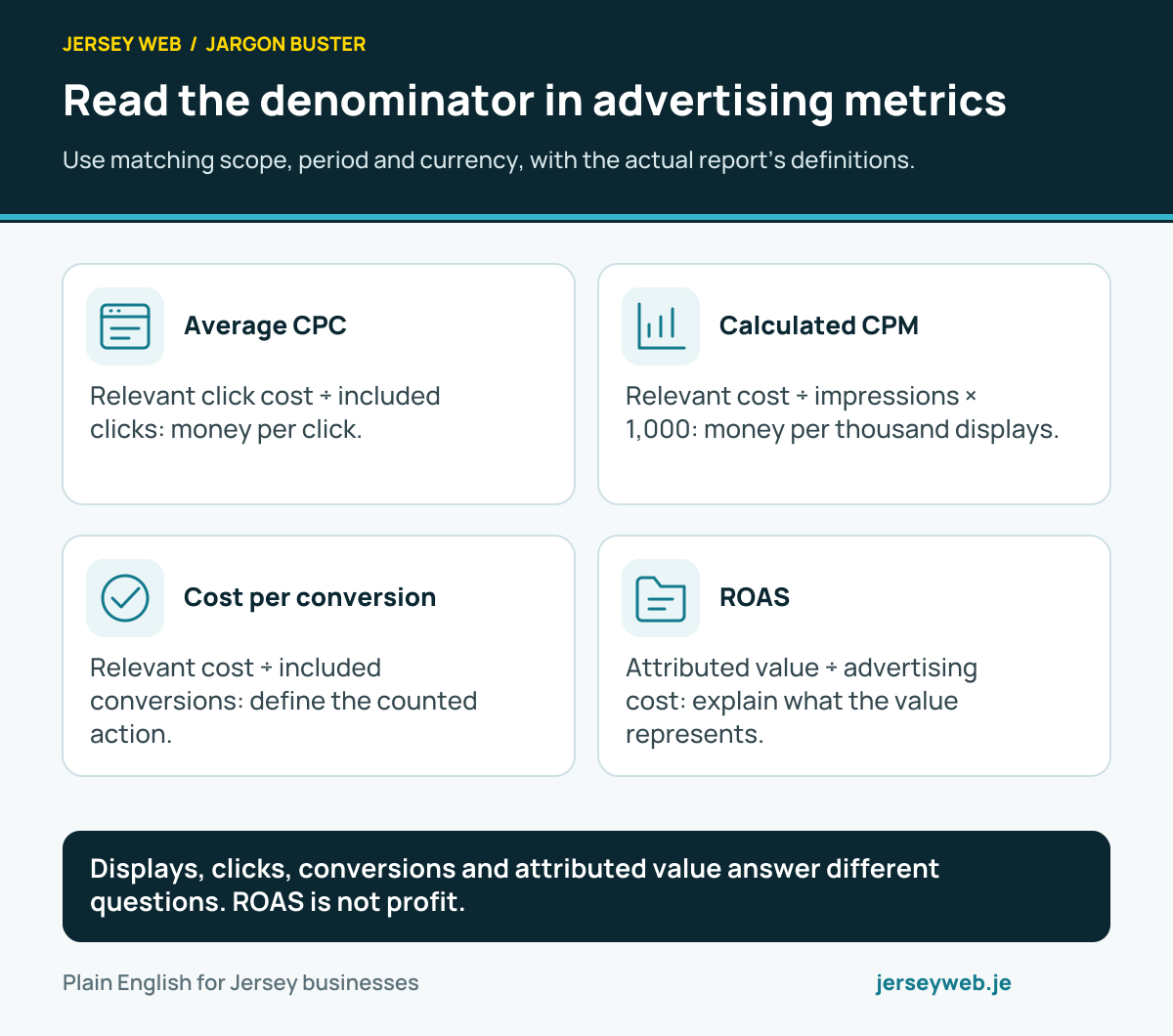
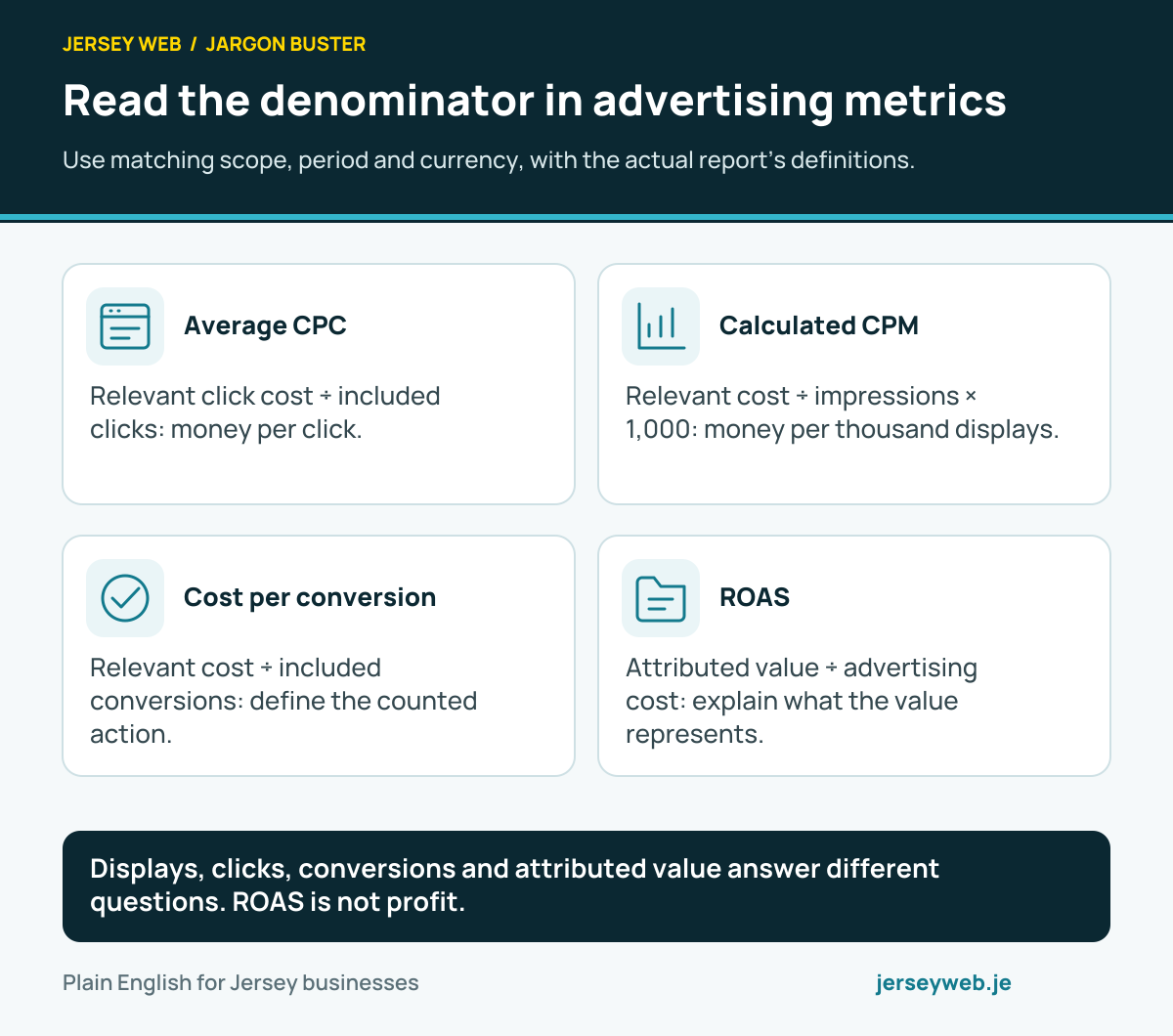
Displays, clicks, conversions and attributed value answer different questions. ROAS is not profit.
Read the diagram in text
- Average CPC. Relevant click cost ÷ included clicks: money per click.
- Calculated CPM. Relevant cost ÷ impressions × 1,000: money per thousand displays.
- Cost per conversion. Relevant cost ÷ included conversions: define the counted action.
- ROAS. Attributed value ÷ advertising cost: explain what the value represents.
Related terms
Learn more
Common questions
- How do I calculate average CPC?
- Divide the relevant total click cost by the number of clicks in the same reporting scope. For example, a hypothetical £50 click cost over 25 clicks gives an average CPC of £2.
- Is average CPC the same as a maximum CPC bid?
- No. The average describes recorded click costs. A maximum bid is a bidding setting, with its actual operation depending on the campaign and provider. Review the specific setup rather than infer one from the other.
- Does a lower CPC prove the advertising is better?
- No. Review relevant customer outcomes, measurement quality and the purpose of the campaign. Less costly clicks can still lead to unsuitable enquiries or no useful action.
- Should clicks equal analytics sessions?
- Do not assume they do. Advertising clicks and analytics sessions have different definitions and coverage. Review the reporting scopes, measurement setup and relevant traffic-source handling before comparing them.
Written by Jersey Web. Last reviewed 3 October 2026. Back to the Jargon Buster.