Watch a related explainer
In plain English
Conversion tracking measures selected actions that matter to a business. The action might be a completed enquiry, a purchase or another defined outcome. It should describe something the business wants to understand, rather than every interaction on a page. A useful measurement begins with a clear definition of success.
The distinction between an interaction and an outcome matters. Clicking a telephone link does not prove a call connected. Pressing a form’s submit button does not prove the receiving service accepted the message. A tracking event should be connected to the stage it genuinely observes, and the report should label that stage honestly.
Terminology varies by product. Google Analytics describes key events as events marked important to the business. Google Ads conversions based on Analytics events have related settings for advertising measurement. The terms should not be assumed to refer to identical totals in every interface.
Why it matters for a Jersey business
A Jersey business deciding whether a website or campaign is useful needs more context than page visits alone. A service page with fewer visitors might generate more suitable enquiries than a widely read general article. Measuring an appropriately defined action can help ask that question, while actual staff records provide another check on the outcome.
Small samples need care. One or two extra enquiries can change a percentage sharply, and a technical change in event counting can make performance appear different without any change in customer behaviour. Record measurement changes and compare periods that use compatible definitions before drawing conclusions.
A realistic Jersey example
Imagine a Jersey maintenance business reviewing its enquiry form. This is an illustrative example. It distinguishes viewing the form, attempting submission and receiving a successful server response. The measurement records the stage supported by the implementation, while staff check whether real messages reach the expected inbox or workflow.
During testing, one action appears twice because two scripts report it. The supplier fixes the duplicate path before the business uses the totals in a campaign review. This demonstrates why installation and verification are separate tasks: a visible event in a report is not automatically a correct event count.
What to define and test
Choose a small number of meaningful outcomes. Write the trigger in ordinary language: for example, “the enquiry service accepts a completed form” rather than “somebody clicks something near contact details”. Name intermediate interactions separately when they are useful for diagnosing where visitors stop.
Test known actions. Complete a representative journey and check the site’s confirmation, the receiving system and the measurement record. Include errors and repeated actions where they affect counting. A purchase measurement should fit the actual order lifecycle and avoid treating a failed or abandoned attempt as a completed sale.
Keep personal information out of unnecessary event payloads. Review the provider’s data requirements and the site’s privacy and consent arrangements. Google’s guidance on avoiding personally identifiable information is relevant to implementation. The useful event often needs a category or reference pattern, not customer names or message content.
Review the reports against business records. Differences can arise through visitor choices, browser conditions, timing and counting rules. Investigate known discrepancies before assuming a marketing change caused them. Keep an implementation note showing the event definition, owner, verification date and any reporting settings that matter.
Common myths
Every click is a conversion. A business outcome needs a specific and useful definition.
Analytics totals are a complete sales ledger. Measurement conditions and rules can create differences.
An event appearing once proves the setup is correct. Normal, failed and repeated journeys still need checking.
Our take
Jersey Web’s view is to begin with the outcome and verify the route to the report. A small set of clearly named, tested measurements can be more useful than a dashboard full of ambiguous actions. Keep the definitions visible so the business understands what its numbers actually represent.
See it in a diagram
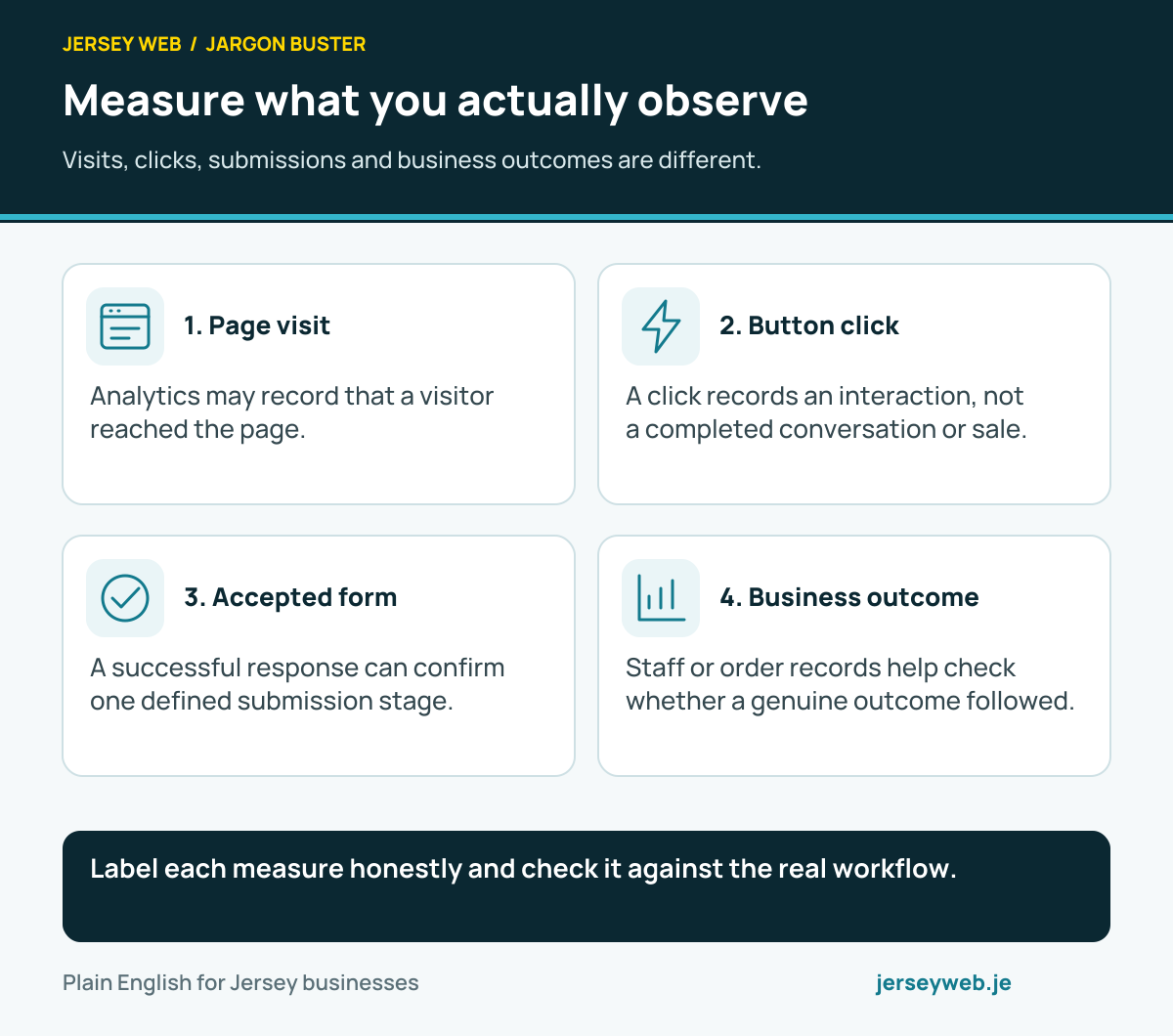
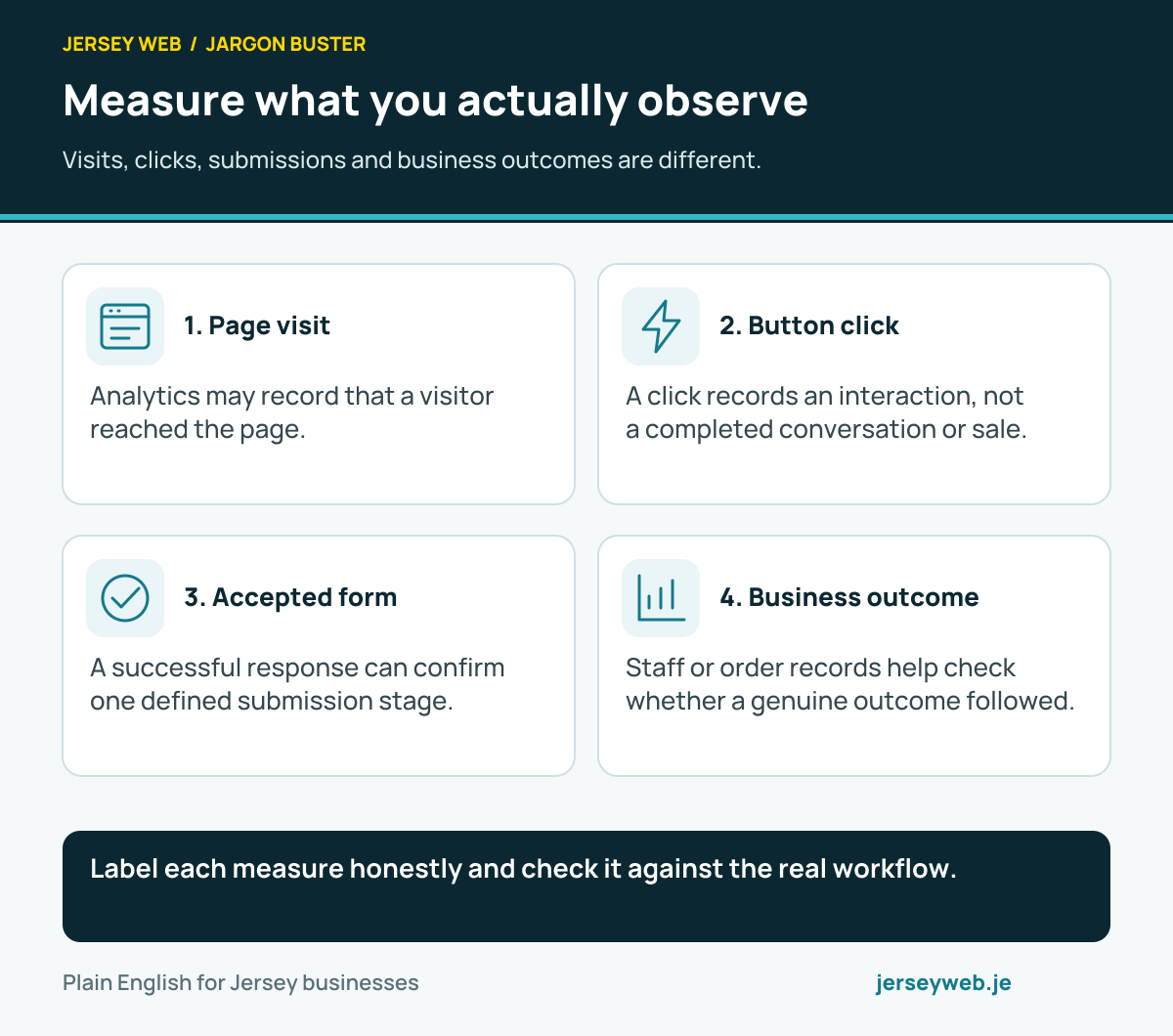
Label each measure honestly and check it against the real workflow.
Read the diagram in text
- Page visit. Analytics may record that a visitor reached the page.
- Button click. A click records an interaction, not a completed conversation or sale.
- Accepted form. A successful response can confirm one defined submission stage.
- Business outcome. Staff or order records help check whether a genuine outcome followed.
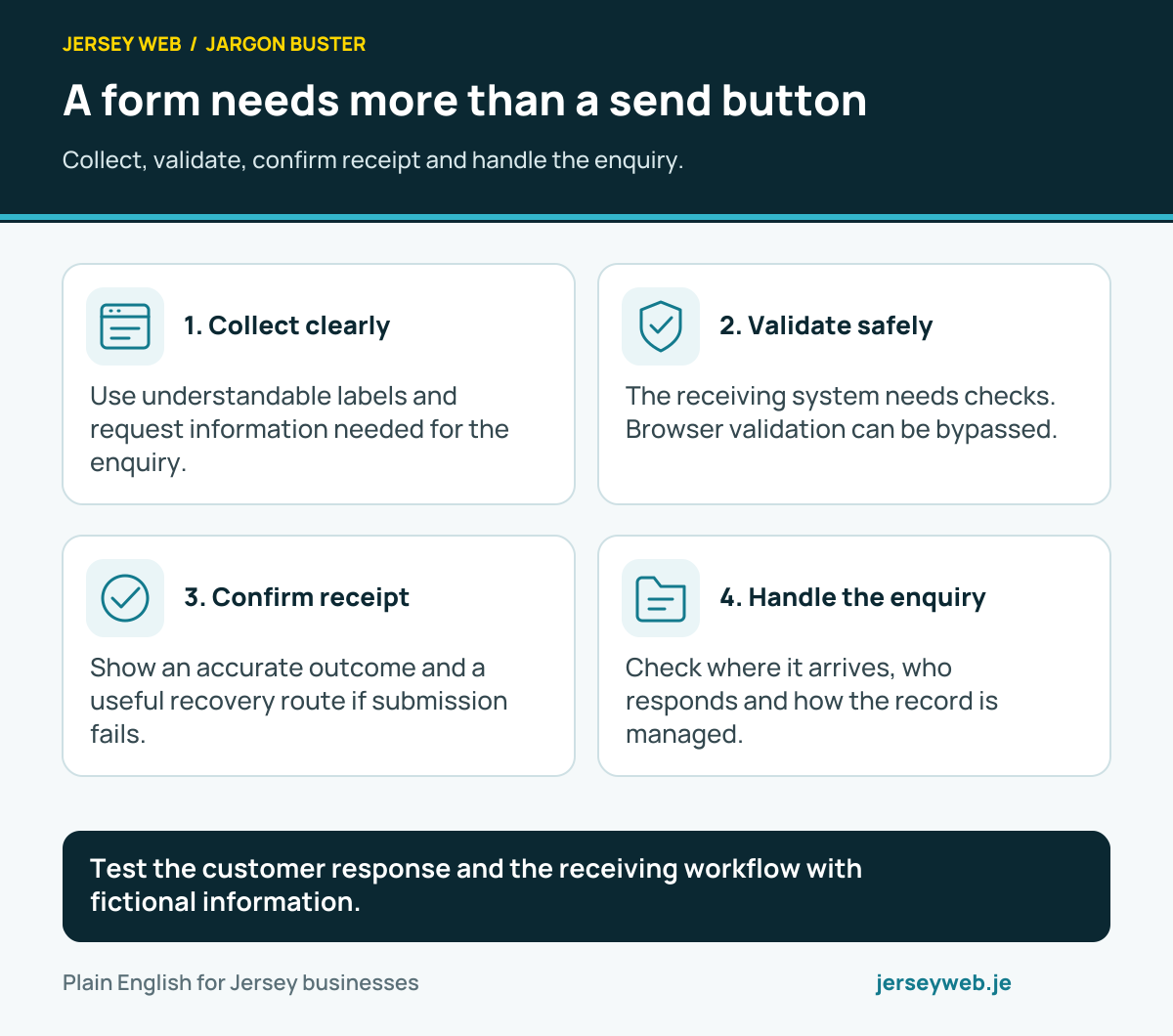
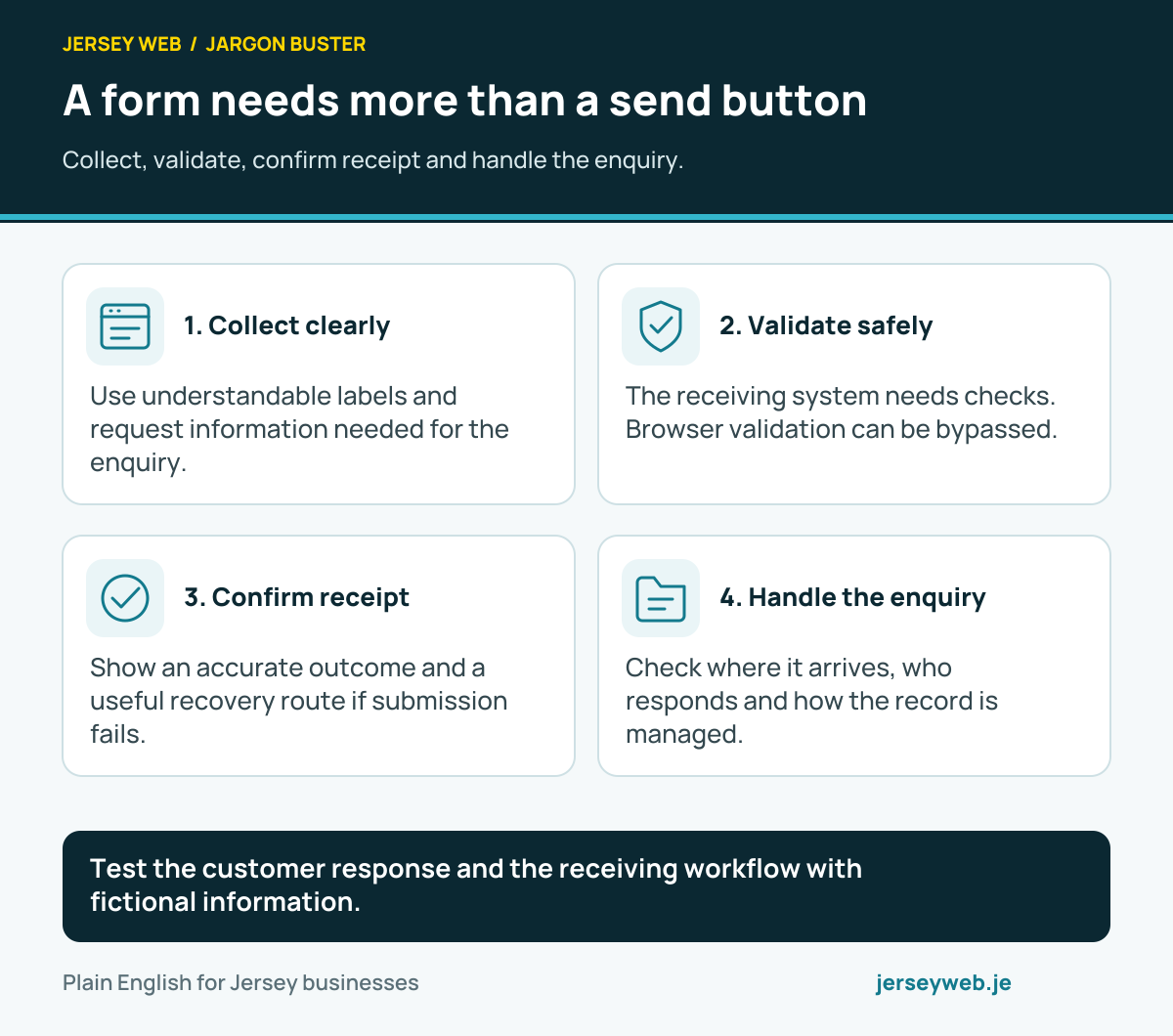
Test the customer response and the receiving workflow with fictional information.
Read the diagram in text
- Collect clearly. Use understandable labels and request information needed for the enquiry.
- Validate safely. The receiving system needs checks. Browser validation can be bypassed.
- Confirm receipt. Show an accurate outcome and a useful recovery route if submission fails.
- Handle the enquiry. Check where it arrives, who responds and how the record is managed.
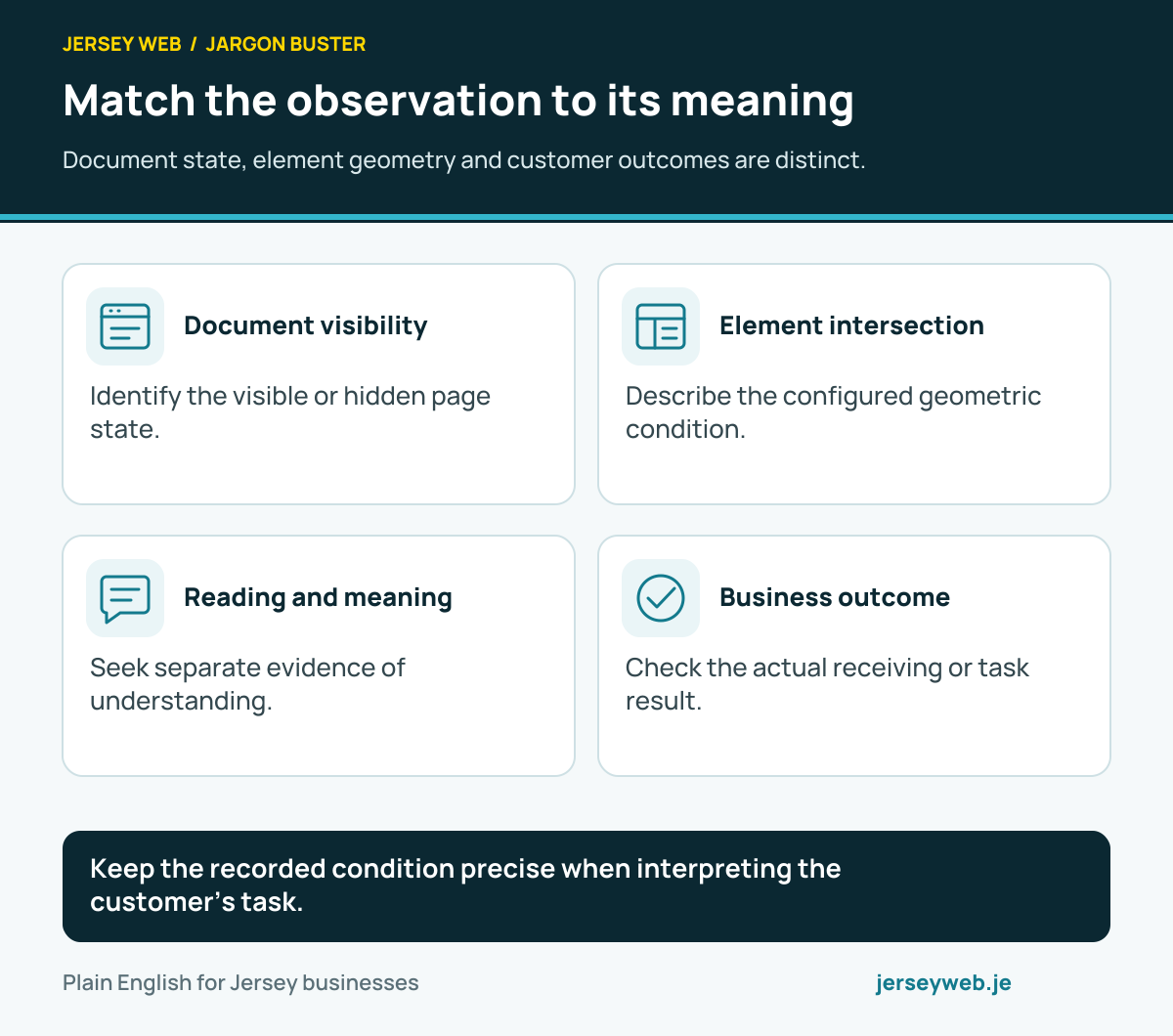
Keep the recorded condition precise when interpreting the customer’s task.
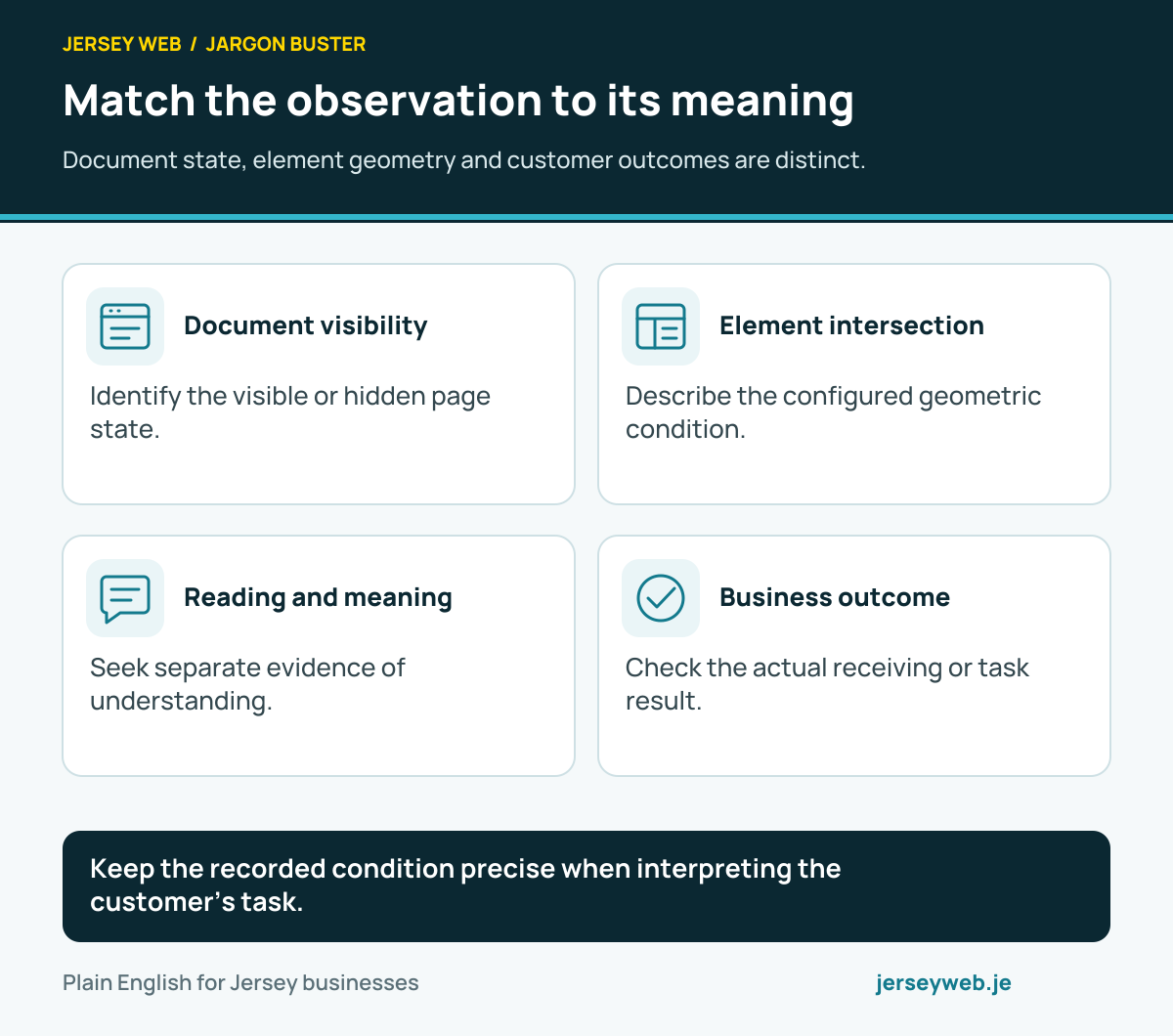
Read the diagram in text
- Document visibility. Identify the visible or hidden page state.
- Element intersection. Describe the configured geometric condition.
- Reading and meaning. Seek separate evidence of understanding.
- Business outcome. Check the actual receiving or task result.
Related terms
Learn more
Common questions
- Is a contact-button click a completed enquiry?
- No. A click records an interaction. A completed form submission, received message or genuine customer enquiry is a different outcome that needs its own definition and verification.
- What does Google Analytics call important events?
- Google Analytics uses key events for interactions marked as important. Google Ads conversions are related but have their own advertising purpose and settings. Check the definitions in the actual report.
- Why can analytics and sales records disagree?
- Consent choices, browser conditions, event setup, counting rules and timing can affect observations. Analytics is not necessarily a complete accounting record. Compare known outcomes and investigate discrepancies.
- Can an event be counted twice?
- Yes, a faulty implementation or multiple reporting paths can create duplicates. Test one completed action and review how it is recorded before using the totals to judge performance.
Written by Jersey Web. Last reviewed 3 October 2026. Back to the Jargon Buster.