Watch a related explainer
In plain English
A sitemap is a structured list of website URLs. In search discussions, the term usually means an XML file that a search engine can read. It points to the pages the publisher considers important and can provide supporting information, such as a meaningful last-modified date or references to certain media.
Think of an inventory sheet that helps someone discover what is available. The sheet does not make every item suitable for every purpose. Likewise, listing a URL in a sitemap does not guarantee that a search engine will index it, rank it or send visitors to it.
Google’s sitemap overview explains the discovery role and its limits. A visitor-facing site map or navigation page is a different presentation. Both may be useful, but a machine-readable file does not replace clear navigation, contextual links and understandable page content.
Why it matters for a Jersey business
A Jersey business may gradually add service explanations, guides and product pages. An organised sitemap provides one place to inspect the URLs intended for search discovery. It can help expose an incomplete release, an outdated address or a category of pages accidentally omitted from the intended public structure.
The useful question is whether the list reflects the actual website. A long list of duplicate or unavailable addresses creates maintenance work without helping the owner understand the site. Keep the discovery file connected to the same publishing process that creates, updates or removes the pages themselves.
A realistic Jersey example
Imagine a Jersey retailer replacing several product-category addresses during a redesign. This is an illustrative example. The team maps the old URLs to appropriate replacements, updates internal links and regenerates the sitemap with the intended current addresses. Staff then compare a sample of entries against the live pages.
If a product range is removed completely, the team decides how its old URLs should behave rather than leaving them in the sitemap indefinitely. The inventory becomes part of the release review, while stock, customer navigation and any appropriate redirects receive their own checks.
What to review
Find the actual file. Ask whether the CMS, build process or another service generates it. Record its location and the responsible setting or script. A file saved on somebody’s computer is not the same as a sitemap available from the public website.
Check the intended URLs. Compare a sample against the preferred domain and current page addresses. Open important service and contact pages from the list. Include recently added content in the sample, because it reveals whether the current publishing workflow updates the sitemap successfully.
Review exclusions. Private pages, deliberately excluded content and old replacements need an explicit decision. Check sitemap settings alongside redirects, canonical choices and indexing controls so that the different parts of the site communicate a coherent publishing intention.
Use update information honestly. A last-modified value should describe a meaningful page change when that information is supplied. Automatically assigning today’s date to unchanged pages makes the date less useful. Ask how the publishing system obtains the value and whether the website owner can explain it.
Keep internal discovery strong. Check that useful pages are reachable through appropriate navigation or links from related content. A sitemap can support discovery, but a reader still needs a clear route through the site. Avoid treating inclusion in a file as a substitute for a sensible information structure.
Review reports after publishing. The relevant search-console tools can show whether a submitted sitemap was read and whether listed pages have indexing issues. Separate discovery, indexing and search performance when interpreting those reports; each answers a different question about the site’s visibility.
Common myths
A sitemap guarantees a Google listing. Discovery and indexing are separate decisions.
Every URL belongs in the file. The list should match the intended public search content.
Automatic generation needs no review. Incorrect settings can produce an inaccurate inventory.
Our take
Jersey Web’s view is to make the sitemap a dependable reflection of the published website. Maintain it through the publishing workflow, check important entries after changes and pair it with clear internal links. Its value is practical discovery and review, without a ranking promise.
See it in a diagram
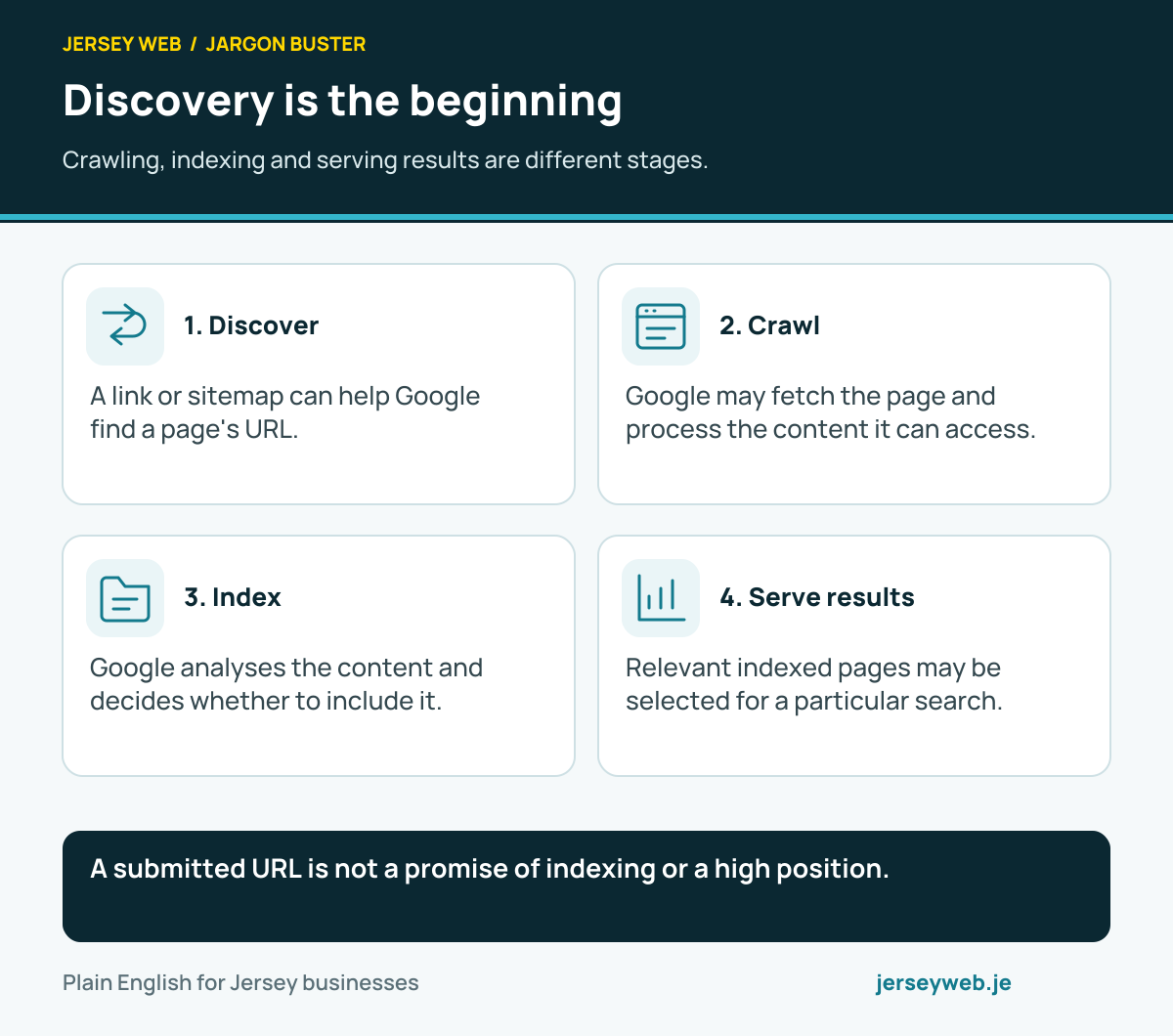
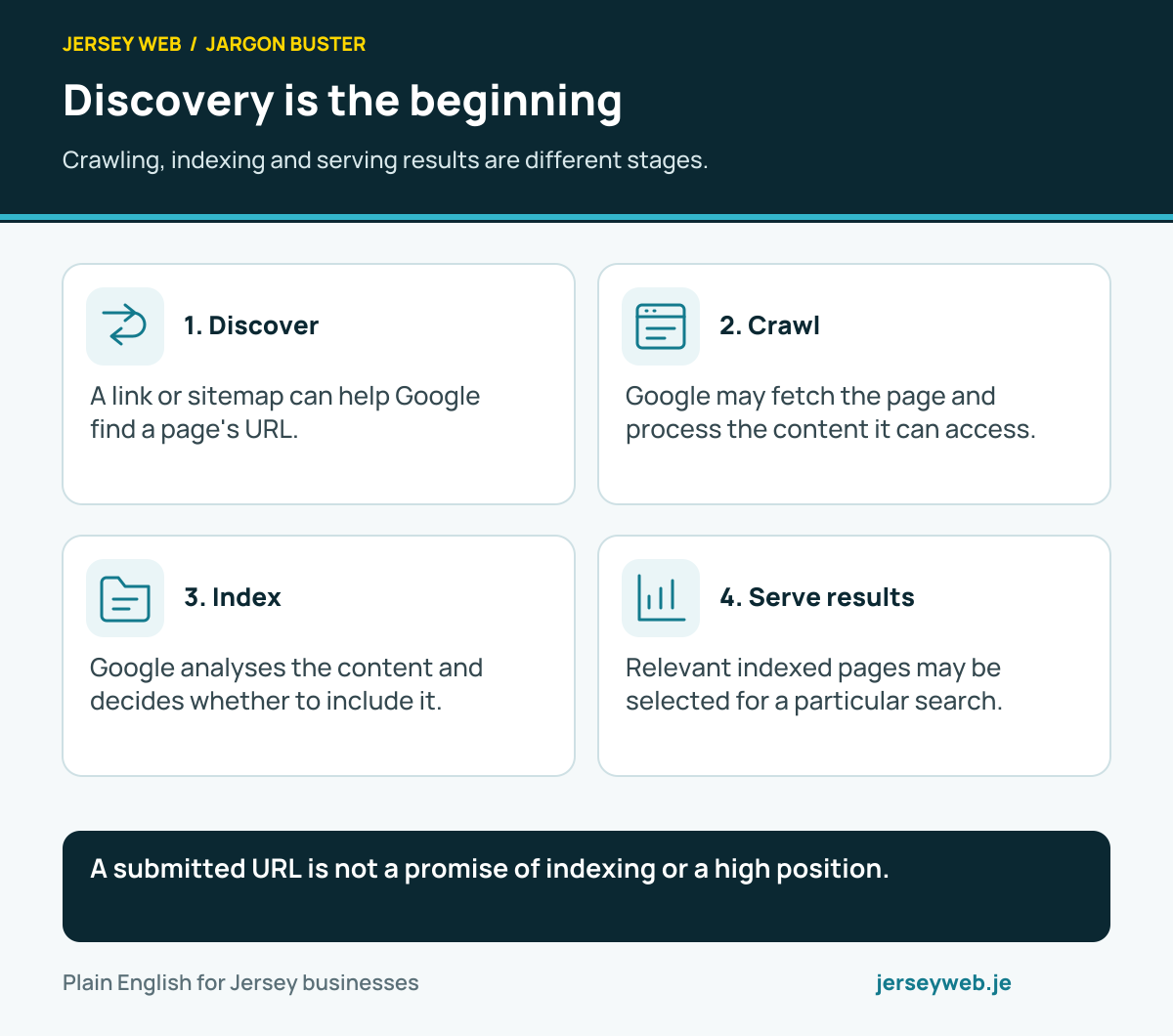
A submitted URL is not a promise of indexing or a high position.
Read the diagram in text
- Discover. A link or sitemap can help Google find a page's URL.
- Crawl. Google may fetch the page and process the content it can access.
- Index. Google analyses the content and decides whether to include it.
- Serve results. Relevant indexed pages may be selected for a particular search.
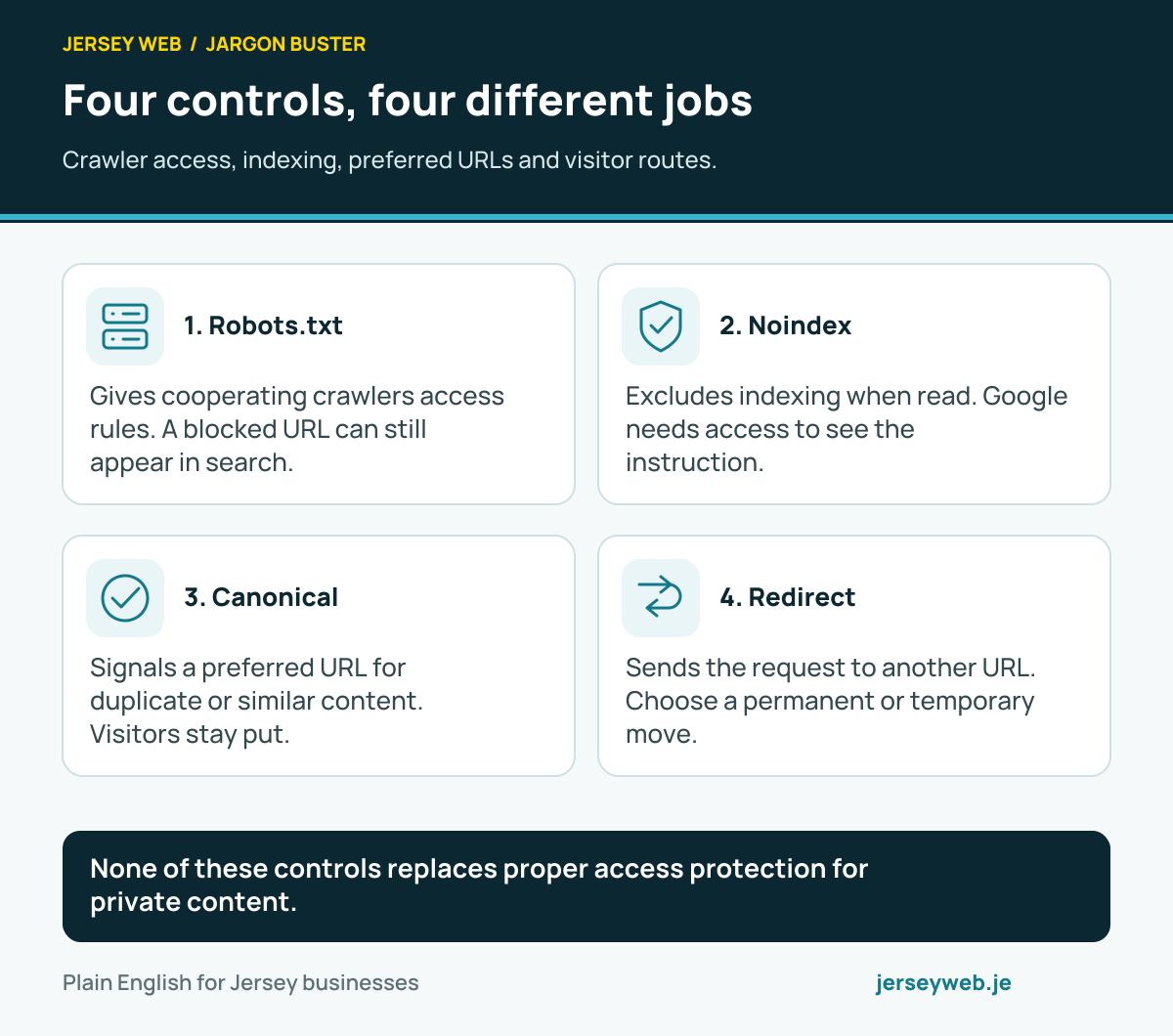
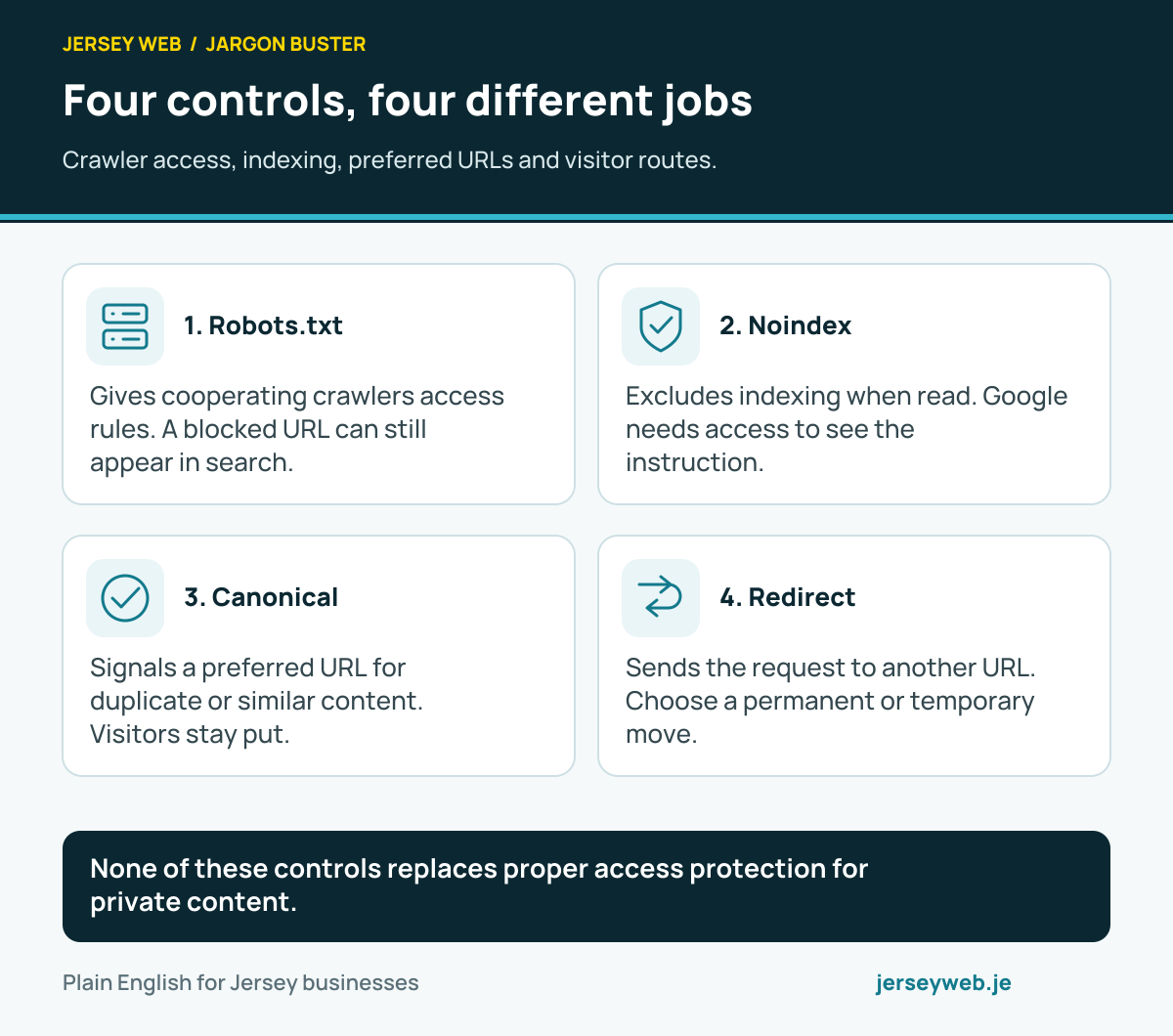
None of these controls replaces proper access protection for private content.
Read the diagram in text
- Robots.txt. Gives cooperating crawlers access rules. A blocked URL can still appear in search.
- Noindex. Excludes indexing when read. Google needs access to see the instruction.
- Canonical. Signals a preferred URL for duplicate or similar content. Visitors stay put.
- Redirect. Sends the request to another URL. Choose a permanent or temporary move.
Related terms
Learn more
Common questions
- Is an XML sitemap the same as a navigation menu?
- No. An XML sitemap is primarily a machine-readable discovery file. Navigation and contextual links help people move around the website and also help crawlers discover pages.
- Does submitting a sitemap guarantee indexing?
- No. A sitemap helps discovery. Search engines still decide whether to crawl, index and show each URL.
- Should old redirects be listed as current pages?
- A sitemap should reflect the public URLs you intend search engines to discover and use. Review old, redirected or excluded entries when the structure changes.
- Can a CMS maintain it automatically?
- Many platforms generate a sitemap. Check the actual output and its settings, because automatic generation does not ensure that every included URL matches your intended search content.
Written by Jersey Web. Last reviewed 3 October 2026. Back to the Jargon Buster.