In plain English
Copywriting is writing that explains an offer and encourages a relevant action. It appears in service pages, advertisements, enquiry prompts and other business communications. Good website copy helps the reader understand what is available, whether it fits their needs and how to take the next step.
Mailchimp’s explanation of copywriting describes its marketing purpose across different formats. The task is not simply to fill a page with persuasive adjectives. On a local business website, accurate service information and clear expectations give a prospective customer a useful basis for deciding what to do.
Copywriting is a different word from copyright. It also overlaps with content writing in practice: a service page may explain a topic while offering an enquiry route. Decide the purpose of the particular page, then make its explanation and call to action work together.
Why it matters for a Jersey business
A customer often needs specific answers before contacting a business. They may want to know which parts of Jersey are served, what the service includes or which details to provide for a quotation. Copy can answer those questions directly and reduce uncertainty about the next step.
Local details should be accurate and useful. Adding Jersey repeatedly does not establish relevance on its own. A truthful description of coverage, appointment arrangements or the enquiry process is more helpful. Keep those details current so that the page continues to match the service staff actually provide.
A realistic Jersey example
Imagine a Jersey garden-maintenance business preparing a service page. This is a hypothetical example. The draft explains which maintenance tasks are offered, how customers request an assessment and which location details are useful. It avoids claiming instant quotations when staff need to review the job first.
The owner checks the wording against the real service and approves an enquiry button leading to the relevant form. The confirmation explains the next contact accurately. This demonstrates a practical copy review; it does not claim that the wording has produced a particular ranking or increase in enquiries.
How to prepare useful website copy
Define the reader and task. Decide whom the page is helping and what they need to understand. A new prospect may need different information from an existing customer checking a maintenance arrangement. Keep the page’s purpose clear enough that the writer can prioritise relevant facts rather than add every possible message.
Gather the source facts. Supply current service descriptions, coverage, process and approved evidence. Identify details that need checking before publication. The writer should not infer a qualification, award or guarantee from an informal note. Label draft assumptions so that the business can resolve them during review.
Use familiar language. Explain technical terms where they affect the decision and remove unnecessary complexity. GOV.UK’s writing guidelines offer guidance on clear content. Those government publishing rules are not commercial requirements, but their emphasis on understandable language is useful when preparing a business page.
Make the structure easy to follow. Use headings that describe the information beneath them and put related details together. A reader should be able to find the service, important conditions and next step without decoding a long promotional introduction. W3C’s writing tips also cover clear content and meaningful headings and link text.
Match the next step to the offer. Explain whether the person is requesting a quotation, sending an enquiry or completing a confirmed booking. Button text and nearby copy should agree with the actual destination. Do not make a preliminary request sound like an accepted reservation if another approval step remains.
Review the tone. Keep the business’s voice recognisable while adapting wording to the situation. An error message needs clarity and help, even if ordinary marketing copy is playful. Mailchimp’s writing principles provide an example of an organisation documenting how its writing should help readers.
Check the published journey. Review the final page, links, form labels and confirmation together. Proofreading a draft document alone does not establish that the website uses the same wording or destinations. Agree who keeps changing service details current and who approves material claims before a later edit goes live.
Common myths
Copywriting means copyright. They describe different concepts.
More superlatives make a stronger offer. Specific, supported information helps a reader judge it.
Every page needs the same sales prompt. The next step should fit the page and reader.
Our take
Jersey Web’s view is to begin with the reader’s task and the business’s verified facts. Explain the offer, make the next step clear and check the complete published journey. Strong copy gives the customer useful information while making promises the business can actually keep.
See it in a diagram
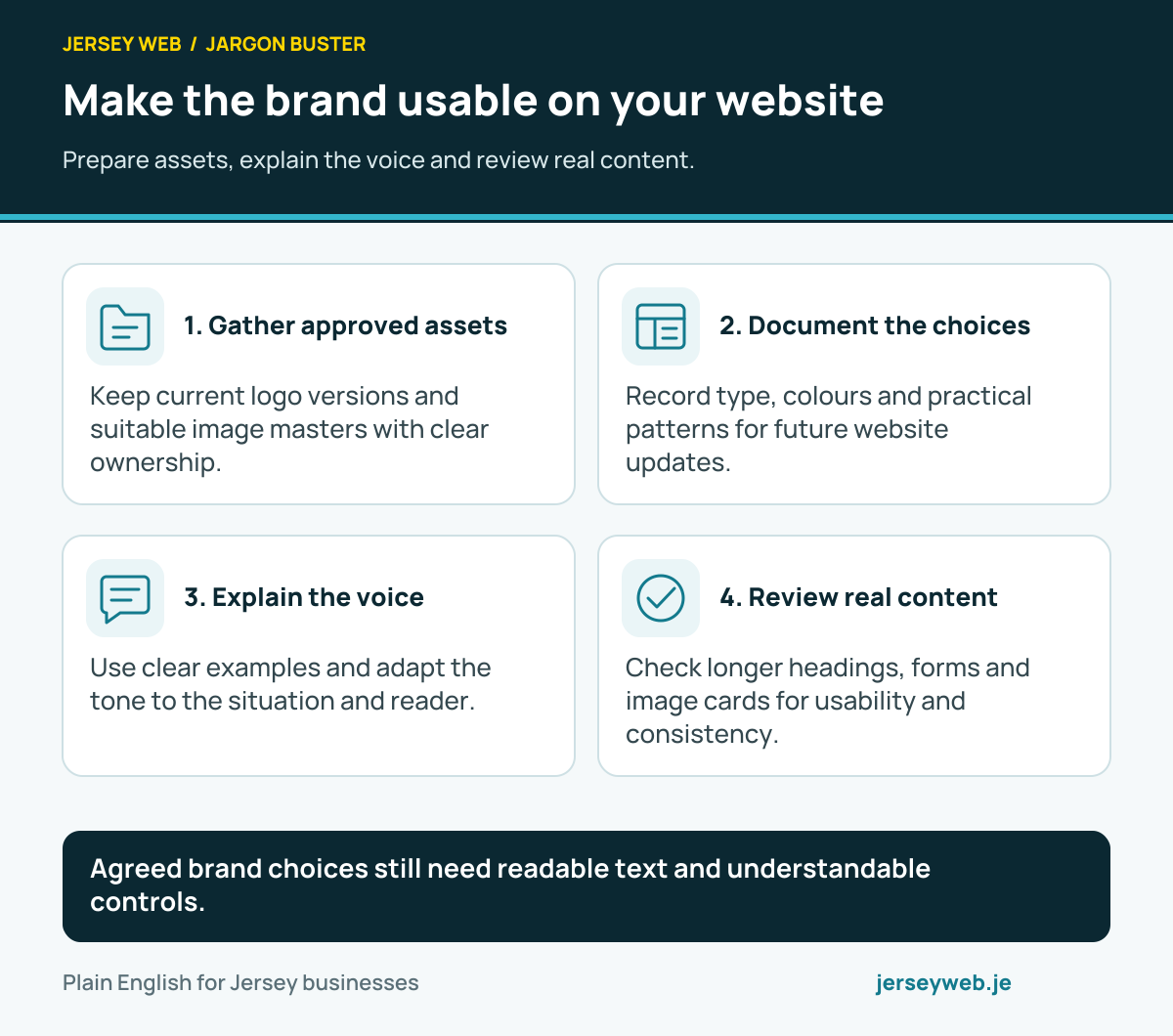
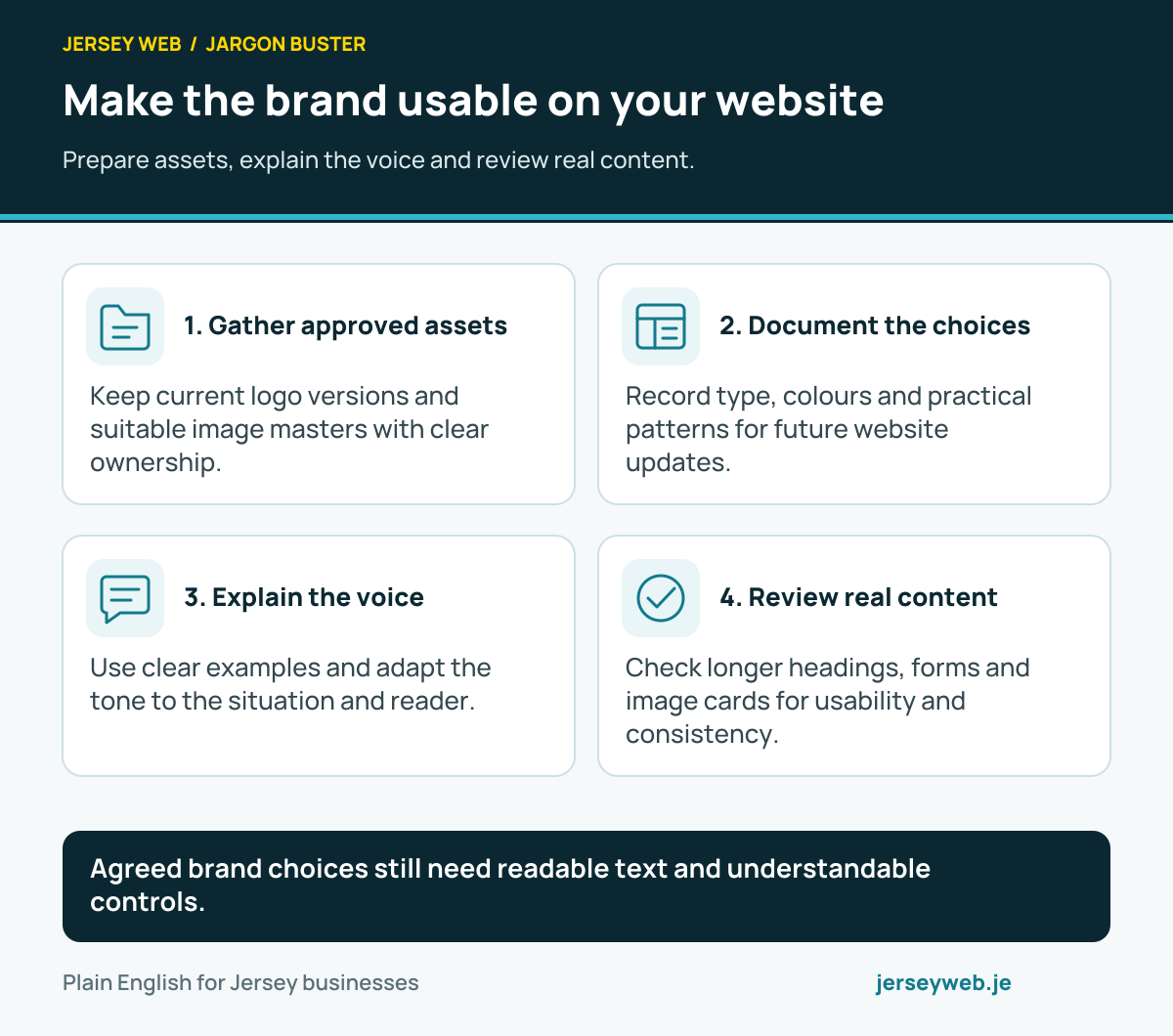
Agreed brand choices still need readable text and understandable controls.
Read the diagram in text
- Gather approved assets. Keep current logo versions and suitable image masters with clear ownership.
- Document the choices. Record type, colours and practical patterns for future website updates.
- Explain the voice. Use clear examples and adapt the tone to the situation and reader.
- Review real content. Check longer headings, forms and image cards for usability and consistency.
Related terms
Learn more
Common questions
- Is copywriting the same as copyright?
- No. Copywriting is writing marketing or action-oriented text. Copyright is a separate concept concerning rights in creative work. The similar spelling does not make them interchangeable.
- Does every page need to push an immediate purchase?
- No. The relevant next step depends on the reader and page purpose. It may be understanding eligibility, comparing an option or making an informed enquiry.
- Does website copy need lots of keywords?
- Use language that accurately describes the topic and matches the reader’s question. Repetition that makes a page harder to read is not a useful substitute for clear, relevant information.
- Can a copywriter invent a stronger business claim?
- Claims should reflect what the business can support. Provide evidence, current service details and agreed wording rather than adding an unsupported award, guarantee or customer quotation.
Written by Jersey Web. Last reviewed 3 October 2026. Back to the Jargon Buster.